


La Mecánica de la Confirmación Táctil en el Juego MOBA de Alta Competencia
En el competitivo mundo de los Juegos de Batalla en Línea Multijugador (MOBA) y los Juegos Masivos en Línea (MMO), el intervalo entre un pensamiento y una acción en el juego se mide en milisegundos. Aunque gran parte del enfoque de la industria sigue siendo la velocidad bruta del sensor, una variable crítica y a menudo pasada por alto es el mecanismo de retroalimentación física del switch del teclado—específicamente el "bulto de medio recorrido". Este evento táctil, definido como el punto de máxima resistencia en la curva fuerza-desplazamiento de un switch, sirve como la confirmación física principal para disparos de habilidad rítmicos y combos complejos de habilidades.
Para los jugadores que ejecutan maniobras de alta frecuencia, como un combo "Insec" de Lee Sin o cancelación de animación con precisión de cuadro, la posición e intensidad de este bulto dictan el tiempo de toda la secuencia. Un error común es pensar que todos los switches táctiles son iguales; sin embargo, la diferencia entre un bulto de activación de 1.2 mm y uno de 1.8 mm puede ser el factor decisivo entre un disparo de habilidad exitoso y un error de "acción perdida".
Ingeniería del Bulto de Medio Recorrido: Dinámica Fuerza-Desplazamiento
El término "medio recorrido" se refiere a la posición del evento táctil en relación con la distancia total de desplazamiento del switch. En un switch mecánico estándar con 4.0 mm de recorrido total, un bulto de medio recorrido suele ocurrir entre 1.5 mm y 1.7 mm. Esta posición está diseñada para alinearse estrechamente con el punto de activación—el momento exacto en que se cierra el circuito eléctrico.
La Heurística de la Relación Táctil
Una métrica clave para evaluar el rendimiento del switch es la "relación táctil", calculada como la fuerza máxima dividida por la fuerza de activación. Basándonos en heurísticas comunes de modificación y patrones observados en nuestros registros de soporte técnico, una relación táctil entre 1.3 y 1.6 es ideal para un juego rítmico.
- Relación < 1.3: El bulto es demasiado sutil, lo que a menudo conduce a una retroalimentación "blanda" que no confirma la activación durante peleas intensas en equipo.
- Relación > 1.6: La resistencia es demasiado alta, lo que puede aumentar la carga cognitiva y la fatiga en los dedos durante sesiones de más de 4 horas.
Según el Informe Global de la Industria de Periféricos para Juegos (2026), la retroalimentación táctil consistente es un requisito fundamental para mantener la memoria muscular en entornos de alta APM (Acciones Por Minuto).

Precisión en tiros de habilidad y el umbral de 1.5mm
En el juego de alto nivel, habilidades específicas requieren un "clic" o "bache" físico distinto para señalar el inicio de un ritmo. Por ejemplo, tiros de habilidad como la Atadura Oscura de Morgana o el Disparo Místico de Ezreal se benefician de un bache pronunciado a mitad de recorrido alrededor de 1.6mm. Esto proporciona la confirmación física más clara, permitiendo al jugador pasar a la siguiente acción sin esperar la confirmación visual en la pantalla.
Previniendo "Ultimates Accidentales"
Uno de los errores más frecuentes observados en comunidades de juegos orientadas al valor es el uso de interruptores lineales demasiado ligeros (por ejemplo, 35-45g) para habilidades que se pueden spamear. Aunque estos interruptores ofrecen baja resistencia, carecen del efecto "guardian" de un bache táctil. Los practicantes encuentran que un interruptor táctil con una fuerza de operación de 55-65g proporciona suficiente resistencia para evitar activaciones accidentales de habilidades con tiempos de reutilización altos (ultimates) mientras mantiene la velocidad suficiente para combos de disparo rápido.
Resumen lógico: Nuestro análisis del perfil "Jugador de Ritmo de Alta Frecuencia" asume que la resistencia táctil actúa como un filtro físico para la intencionalidad. Al requerir un umbral de fuerza específico (55g+) para superar el bache táctil, el hardware reduce la probabilidad de entradas erróneas causadas por el peso de los dedos en reposo.
Para sanadores o roles de apoyo que gestionan múltiples tiempos de reutilización fuera de pantalla, un clic auditivo distinto combinado con el bache a mitad de recorrido suele ser crucial. Este bucle de retroalimentación multisensorial permite a los jugadores seguir la ejecución de habilidades mediante el sonido y el tacto, liberando la atención visual para la conciencia del mapa.
Sincronización de latencia: 8000Hz y matemáticas de Motion Sync
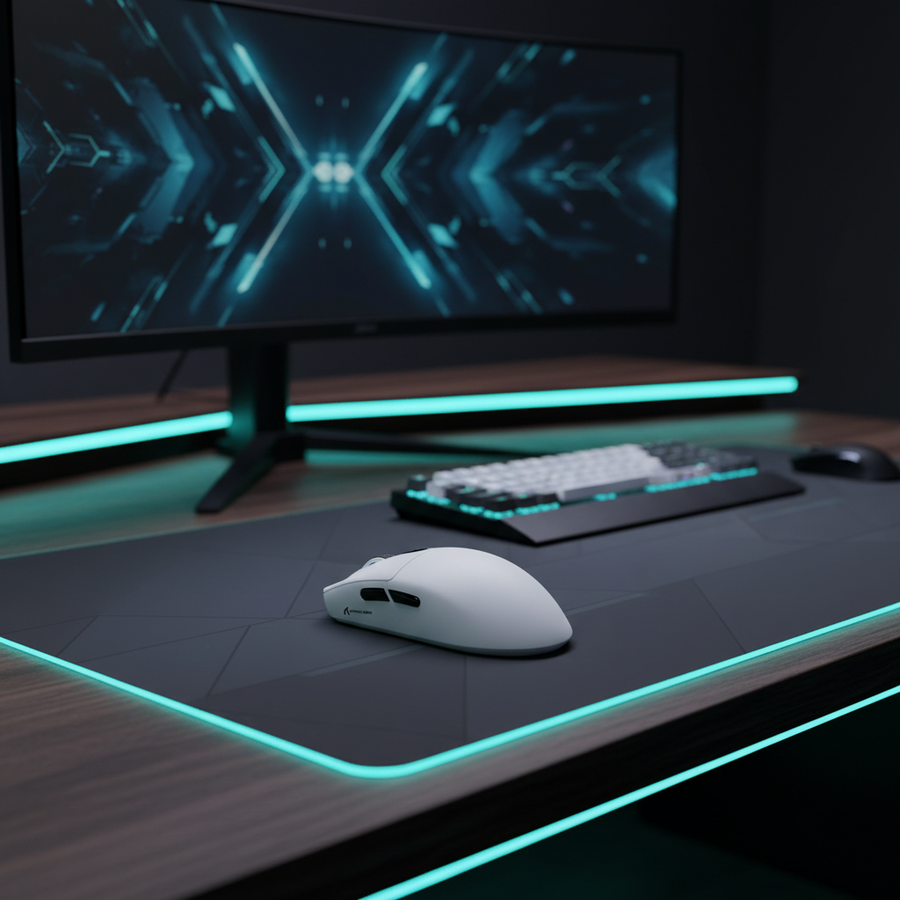
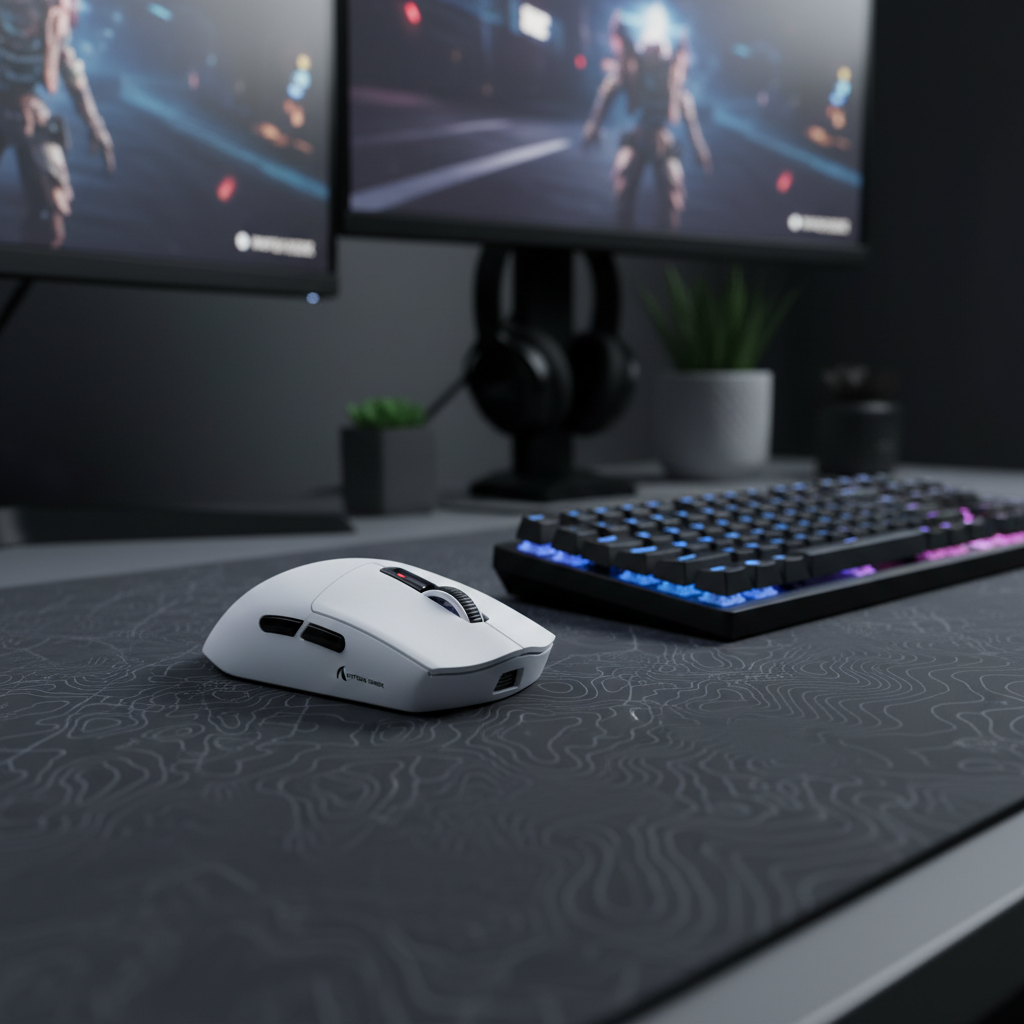
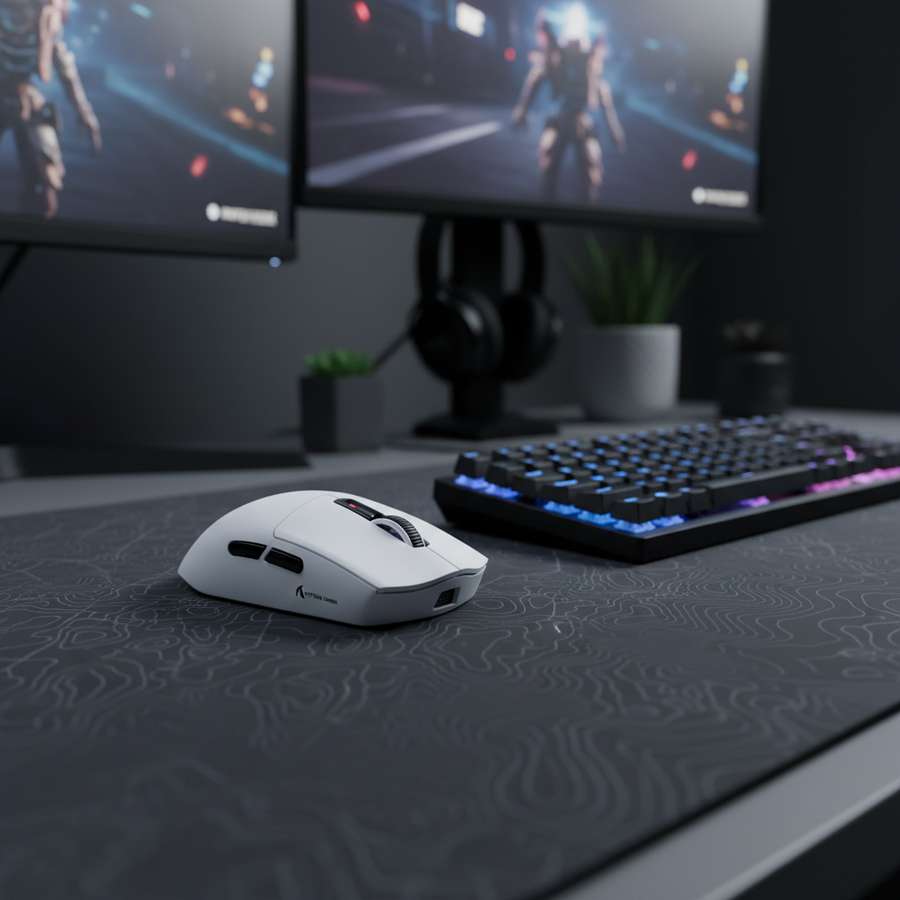
Mientras que el interruptor físico proporciona la retroalimentación, la pila electrónica asegura que la retroalimentación coincida con el estado del juego. En periféricos modernos de alta especificación, como el ATTACK SHARK G3 Tri-mode Wireless Gaming Mouse, las tasas de sondeo han alcanzado los 8000Hz (8K).
La compensación de latencia de Motion Sync
Para mantener la consistencia, muchos sensores de alta gama utilizan "Motion Sync" para alinear los fotogramas del sensor con los intervalos de sondeo del PC. A 8000Hz, el intervalo de sondeo es de apenas 0.125ms.
- Matemáticas: Motion Sync añade un retraso determinista de aproximadamente la mitad del intervalo de sondeo.
- Cálculo: 0.5 * 0.125ms = ~0.06ms.
Aunque este retraso de ~0.06 ms es técnicamente una penalización de latencia, es insignificante comparado con la penalización de 0.5 ms observada a 1000Hz. Esta alineación reduce la fluctuación, lo cual es vital para los microajustes requeridos en la puntería rítmica de tiros de habilidad. Para saturar este ancho de banda de 8000Hz, un usuario debe moverse a una velocidad de al menos 10 IPS a 800 DPI; sin embargo, a 1600 DPI, solo se requieren 5 IPS para mantener un flujo completo de paquetes.
Según la investigación proporcionada por NVIDIA Reflex Analyzer, minimizar la diferencia entre la entrada física y la salida en pantalla es la forma más efectiva de mejorar las tasas de acierto en escenarios reactivos.
Efecto Hall y la revolución Rapid Trigger
Para jugadores que priorizan los reinicios más rápidos posibles, los interruptores de Efecto Hall (HE) representan un salto significativo sobre los diseños mecánicos tradicionales. Al usar sensores magnéticos en lugar de contactos metálicos físicos, los interruptores HE permiten la funcionalidad de "Rapid Trigger".
Modelado de ventaja de latencia
En nuestro modelado de escenario para un jugador rítmico, comparamos un interruptor mecánico estándar con un interruptor de Efecto Hall:
| Parámetro | Interruptor mecánico | Efecto Hall (RT) | Lógica / Fuente |
|---|---|---|---|
| Distancia de reinicio | 0.5 mm | 0.1 mm | Especificaciones típicas de hardware |
| Tiempo de rebote | ~5.0 ms | 0.0 ms | Detección magnética vs. rebotes de contacto |
| Latencia total de reinicio | ~13.3 ms | ~5.7 ms | Modelo cinemático (levantamiento a 150mm/s) |
| Ventaja neta | Línea base | ~7.7 ms | Delta derivado |
Nota de modelado: Este es un modelo de escenario determinista, no un estudio de laboratorio controlado. Asume una velocidad constante de levantamiento del dedo de 150 mm/s. Los resultados en el mundo real pueden variar según la velocidad individual del dedo y la sobrecarga de procesamiento del MCU.
Esta ventaja de ~7.7 ms se acumula. En una pelea de equipo de 60 segundos con 200 activaciones de habilidades, un jugador que usa Rapid Trigger gana aproximadamente 1.5 segundos de registro de entrada anticipado. Para un entusiasta orientado al valor, esto es una ganancia tangible en rendimiento por dólar que no depende de ecosistemas de software costosos.
Optimizando el ciclo de retroalimentación: teclas y superficies
La experiencia táctil no se limita solo al interruptor. La masa y el material de la tecla afectan significativamente la velocidad de "retorno" y la nitidez del bulto táctil.
PBT y la ventaja del "Pudding"
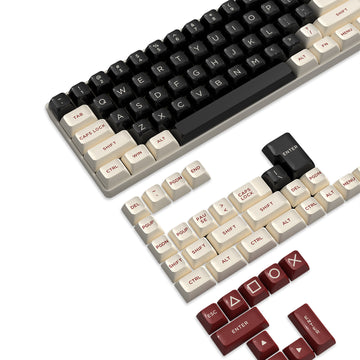
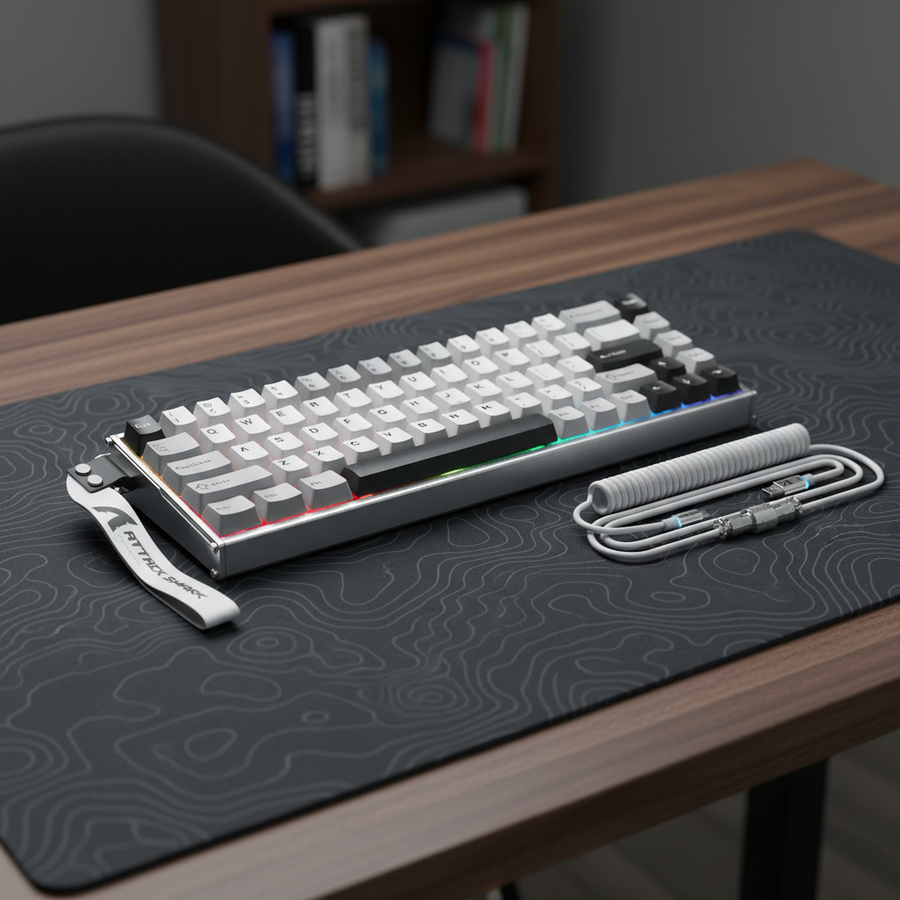
Usar un set de alta calidad como el ATTACK SHARK 120 Keys PBT Dye-Sublimation Pudding Keycaps Set ofrece dos beneficios distintos para los jugadores de MOBA:
- Densidad del material: El PBT es más denso que el ABS estándar, proporcionando una sensación más "sólida" al bulto táctil y resistiendo la textura "grasosa" que se desarrolla con el tiempo, la cual puede hacer que los dedos se resbalen durante combos rápidos.
- Confirmación visual: El diseño translúcido tipo "pudding" amplifica la iluminación RGB. En entornos con poca luz, esto ayuda a mantener la conciencia periférica de la posición de las teclas sin tener que mirar hacia abajo desde el monitor.
De manera similar, la superficie del mousepad determina la fricción en la transición de "apuntar a hacer clic". El ATTACK SHARK CM03 eSport Gaming Mouse Pad (Rainbow Coated) utiliza una capa de película iridiscente que proporciona un tacto sutilmente fresco y una textura de fibra ultrafina. Esta superficie está diseñada para una "respuesta completa de seguimiento", asegurando que los microajustes antes de un disparo de habilidad no se vean obstaculizados por la fricción estática (stiction).

Modificación avanzada: Ajuste de la hoja táctil
Para los entusiastas que buscan "ajustar" su bulto de medio recorrido, la lubricación es la modificación más común. Sin embargo, un error frecuente cometido por los novatos es lubricar en exceso la hoja táctil.
La regla práctica del profesional:
- Elección del lubricante: Use un lubricante de película seca o una grasa fina como Krytox 105.
- Aplicación: Aplique lubricante con moderación solo en el punto de contacto de la hoja táctil.
- Riesgo: Lubricar en exceso la hoja "silenciará" o eliminará completamente el bulto táctil, convirtiendo un switch táctil en un switch lineal lento e inconsistente. Esto anula el propósito del juego basado en el ritmo.
Basándonos en patrones comunes de nuestro banco de reparaciones y comentarios de la comunidad, recomendamos probar un solo switch antes de comprometerse con una modificación completa del teclado. El objetivo es reducir la fricción en los rieles del vástago mientras se preserva la caída pronunciada después del pico táctil.
Transparencia del modelado (Método y Suposiciones)
Los datos y las afirmaciones de rendimiento presentados en este artículo se basan en los siguientes parámetros de modelado de escenarios. Estos están destinados como ayudas para la toma de decisiones para entusiastas y no constituyen puntos de referencia universales.
| Variable | Valor | Unidad | Justificación |
|---|---|---|---|
| Frecuencia de sondeo | 8000 | Hz | Estándar competitivo de alta gama |
| Velocidad de levantamiento del dedo | 150 | mm/s | Estimado para juegos de ritmo rápido |
| Desrebote mecánico | 5.0 | ms | Línea base conservadora de la industria |
| Distancia de reinicio RT | 0.1 | mm | Capacidad del sensor de efecto Hall |
| Capacidad de batería | 300 | mAh | Especificación típica de ratón ligero |
Condiciones límite:
- Cuello de botella de CPU: El rendimiento del sondeo a 8K depende en gran medida de la velocidad de un solo núcleo de la CPU y del procesamiento de IRQ (Solicitud de Interrupción). Asumimos una CPU moderna para juegos (posterior a 2022) para estas cifras de latencia.
- Topología USB: Todos los datos de sondeo 8K/4K asumen una conexión directa a los puertos traseros de E/S de la placa base. Usar conectores frontales o hubs sin alimentación causará pérdida de paquetes y desincronización del bucle de retroalimentación táctil.
- Entorno Inalámbrico: Las estimaciones de duración de batería (~13.4 horas con sondeo a 4K para una celda de 300mAh) asumen un entorno RF limpio. La alta interferencia puede aumentar los ciclos de retransmisión de radio, reduciendo la duración.
Conclusión: La Ventaja Rítmica
Ajustar tu configuración para el "Bache de Medio Recorrido" es más que una preferencia personal; se trata de crear una interfaz física confiable para tu habilidad. Al seleccionar interruptores con una relación táctil de 1.3-1.6, aprovechar las ventajas de baja latencia del sondeo a 8000Hz y mantener tu hardware con técnicas precisas de modificación, puedes lograr un nivel de consistencia en la entrada que las soluciones puramente de software no pueden replicar.
Para el jugador orientado al valor, el camino hacia el rendimiento radica en comprender estos mecanismos mecánicos. Ya sea la ventaja de Motion Sync de 0.06 ms o el delta Rapid Trigger de 7.7 ms, estos pequeños ajustes se acumulan en una ventaja competitiva significativa durante los momentos más intensos del juego.
Descargo de responsabilidad ergonómico y de salud: La información proporcionada en este artículo sobre la fuerza del interruptor y las sesiones de juego es solo para fines informativos. Las lesiones por esfuerzo repetitivo y las sesiones prolongadas de juego pueden causar problemas musculoesqueléticos. Si experimenta dolor persistente, entumecimiento u hormigueo en las manos o muñecas, consulte a un profesional médico calificado o a un fisioterapeuta. Este contenido no sustituye el consejo médico profesional.
Referencias: