


La mecánica de la cadencia de enfriamiento: por qué la velocidad de retorno dicta el APM
En el entorno de alta presión de los juegos competitivos MOBA (Multiplayer Online Battle Arena) y MMO (Massively Multiplayer Online), el concepto de "Acciones Por Minuto" (APM) a menudo se ve como una medida de la velocidad bruta del dedo. Sin embargo, un análisis técnico revela que el APM está fundamentalmente limitado por la capacidad del hardware para reiniciarse. Esto se conoce como "Cadencia de enfriamiento"—la ventana rítmica entre que una tecla es accionada y el interruptor vuelve a su estado de preparación para el siguiente comando.
Para un jugador que ejecuta un combo de esquiva rápida o una rotación precisa de habilidad, la diferencia entre un interruptor que se reinicia en 3.3ms y uno que se reinicia en 0.7ms no es solo académica; es el margen de error que previene "acciones perdidas". Cuando un interruptor no regresa lo suficientemente rápido para coincidir con la intención del jugador, la entrada se pierde, rompiendo el ritmo del enfrentamiento.
Este artículo investiga los mecanismos técnicos de las velocidades de retorno del interruptor, los compromisos biomecánicos de la tensión del resorte y las optimizaciones a nivel de sistema necesarias para traducir entradas de alta frecuencia en dominio en pantalla.
La física del reinicio: ingeniería mecánica vs. magnética
Los interruptores mecánicos tradicionales dependen de resortes hoja físicos y puntos de contacto metálicos. Este diseño introduce un retraso determinista conocido como histéresis—la distancia entre el punto de actuación (donde se envía el comando) y el punto de reinicio (donde el interruptor está listo para ser presionado nuevamente).
El Delta de latencia: un modelo comparativo
Basándonos en nuestro modelado de escenarios para especialistas con alta APM, comparamos la latencia total del ciclo de interruptores mecánicos estándar contra interruptores magnéticos Hall Effect (HE) equipados con tecnología Rapid Trigger (RT).
| Componente | Interruptor mecánico (Est.) | Hall Effect RT (Est.) | Unidad |
|---|---|---|---|
| Tiempo de recorrido | ~5.0 | ~5.0 | ms |
| Desrebote de firmware | ~5.0 | ~0.0 | ms |
| Tiempo físico de reinicio | ~3.3 | ~0.7 | ms |
| Ciclo total de entrada | ~13.3 | ~5.7 | ms |
Nota de modelado (Delta de tiempo de reinicio): Este modelo asume una velocidad constante de levantamiento del dedo de 150mm/s y una distancia mecánica de reinicio de 0.5mm frente a una distancia de reinicio Rapid Trigger de 0.1mm. El modelo mecánico incluye un período de rebote de 5ms, que es una salvaguarda común contra el "doble clic" en diseños tradicionales de resorte hoja.
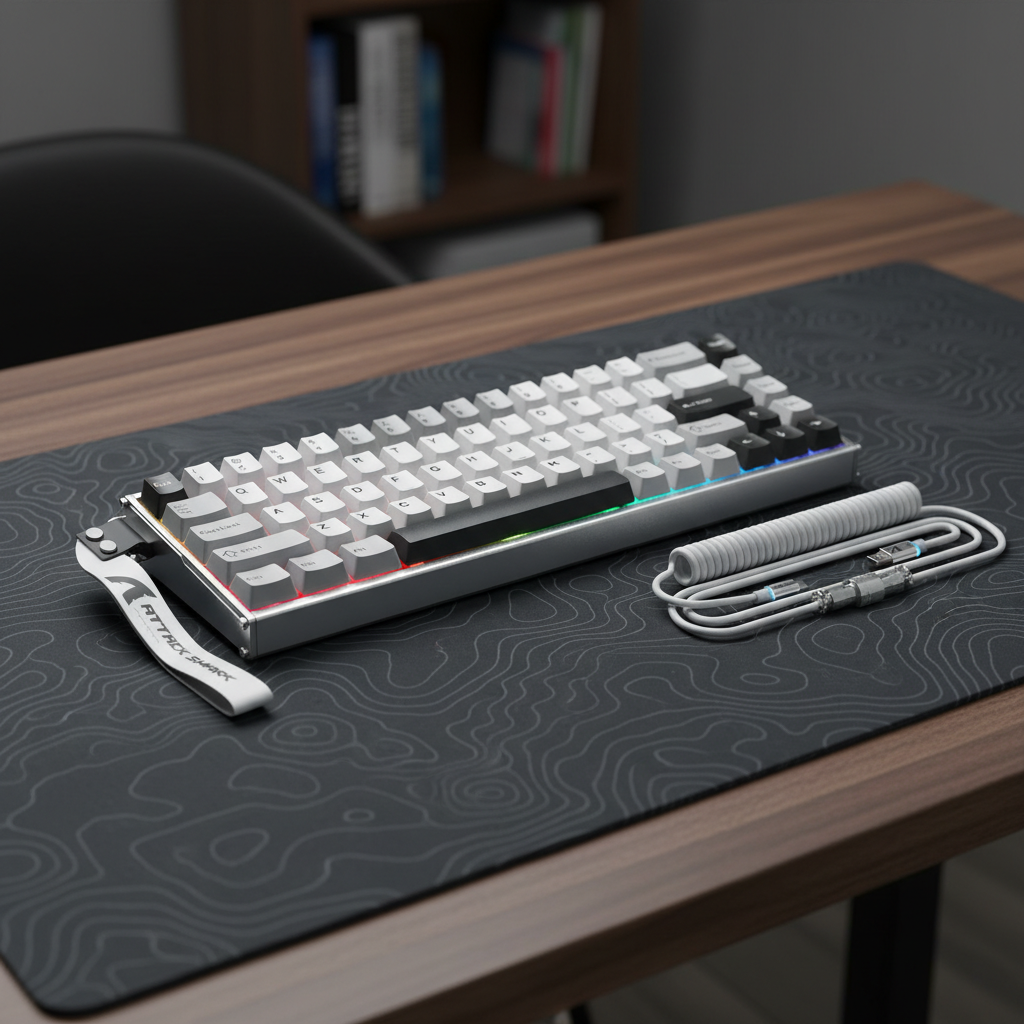
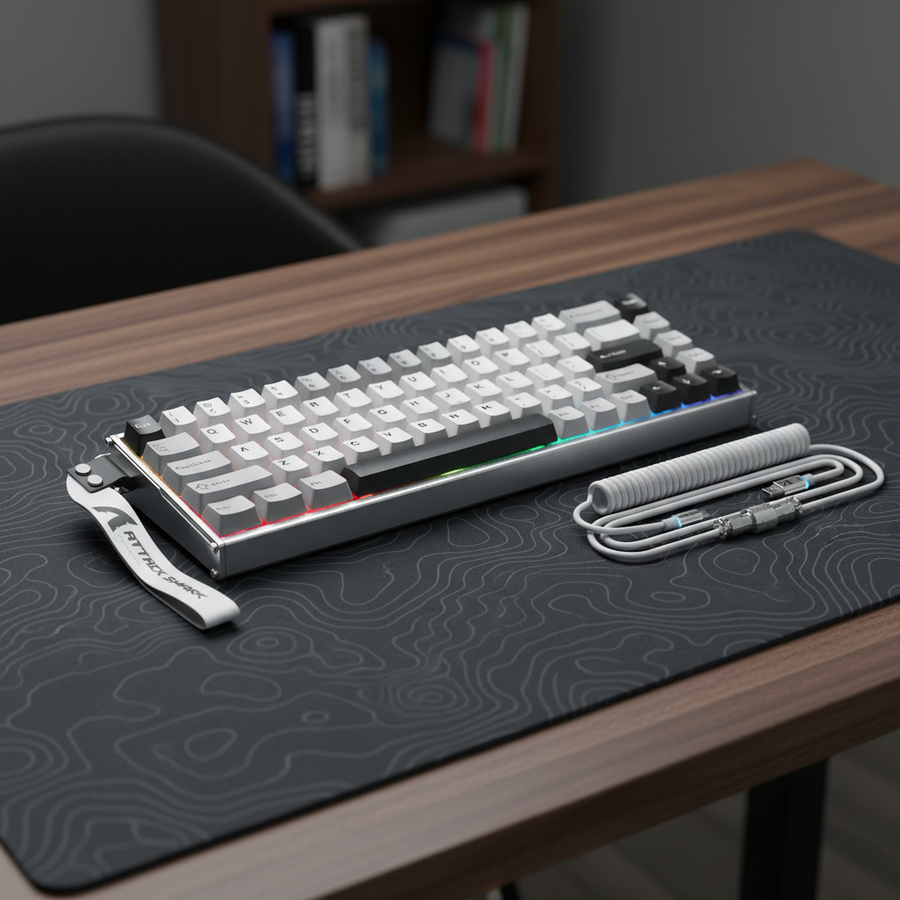
El Teclado ATTACK SHARK X68MAX HE Rapid Trigger CNC de Aluminio utiliza este mecanismo de Efecto Hall para lograr una ventaja teórica de ~7.6ms por reinicio de pulsación. Para un jugador que mantiene un ritmo de 300 APM, esta reducción acumulativa de latencia se traduce en más de 2 segundos de tiempo de entrada "recuperado" cada minuto de combate activo.
Rapid Trigger y el Fin de la Histéresis
El principal cuello de botella en los interruptores tradicionales es el punto de reinicio fijo. Si un jugador solo levanta parcialmente el dedo antes de intentar la siguiente pulsación, el interruptor puede no haber cruzado el umbral de reinicio, resultando en una entrada fallida. La tecnología Rapid Trigger, como se define en la Base de Conocimiento FCC OET sobre procesamiento de señales para dispositivos de alta frecuencia, permite que el sensor detecte el movimiento ascendente instantáneamente (tan bajo como 0.1mm) y reinicie el interruptor dinámicamente. Esta desvinculación del reinicio de un punto físico fijo es el avance más significativo para el spam de habilidades en MOBA.
Eficiencia Biomecánica: El Dilema 45g vs. 65g
Mientras que la velocidad de retorno está gobernada por la física, la sostenibilidad de esa velocidad está gobernada por la biomecánica. La fuerza ascendente del interruptor es proporcionada por el resorte interno, y existe una idea errónea común de que "más pesado es mejor" para retornos más rápidos.
El Análisis del Índice de Tensión (SI)
En nuestro modelado de sesiones de juego extendidas de 3 horas, aplicamos el Índice de Tensión Moore-Garg—una herramienta validada para evaluar el riesgo de trastornos en la extremidad superior distal—a dos pesos diferentes de resortes.
- Escenario A (Resortes Pesados de 65g): Los jugadores a menudo usan resortes pesados para evitar activaciones accidentales durante peleas frenéticas en equipo. Sin embargo, nuestro modelo arrojó un puntaje del Índice de Tensión de 36.0, que cae en la categoría "Peligroso" (umbral SI > 5).
- Escenario B (Resortes Medios de 45g-55g): Este rango de peso típicamente proporciona suficiente fuerza de retorno mientras mantiene una carga de trabajo sostenible para los pequeños grupos musculares del dedo.
Resumen Lógico: La clasificación de Peligro para resortes de 65g está determinada por el "Multiplicador de Intensidad" (fuerza requerida) combinado con "Esfuerzos por Minuto" (APM). En un contexto MOBA donde el APM supera los 300, la tensión acumulada en los tendones aumenta exponencialmente durante un bloque de práctica de 3 horas.
Los practicantes notan que aunque un resorte pesado puede ofrecer un retorno rápido, conduce a "calambres en la garra" y una caída notable en la consistencia de APM después de los 90 minutos. Para la longevidad competitiva, es crítico igualar el peso del resorte con la fuerza del dedo. Un resorte progresivo—que comienza ligero pero se vuelve más pesado hacia el fondo—es a menudo el punto medio optimizado, proporcionando retroalimentación táctil de reset sin la fatiga de un resorte lineal pesado.
Ingeniería de retroalimentación táctil: confirmando la acción
En el juego de alto nivel, el oído y la punta del dedo actúan como "monitores de enfriamiento" secundarios. La retroalimentación auditiva y táctil confirma que una habilidad se ha activado con éxito, permitiendo al jugador pasar mentalmente a la siguiente acción.
El fenómeno del "Ritmo de Reset"
Los jugadores experimentados a menudo desarrollan una memoria muscular subconsciente basada en la sensación específica de sus interruptores. Este "Ritmo de Reset" puede verse interrumpido al cambiar de hardware. Por ejemplo, el reset ultra rápido de ~0.7ms de un interruptor Hall Effect puede sentirse inicialmente "demasiado rápido", causando que el jugador falle el tiempo de su siguiente pulsación.
Para mantener el ritmo, muchos jugadores priorizan interruptores con:
- Estabilidad del vástago: La lubricación de alta calidad y las tolerancias ajustadas de la carcasa eliminan el "balanceo del vástago" y el "ping del resorte". Esto reduce el ruido sensorial, permitiendo que el jugador se concentre en el clic de activación.
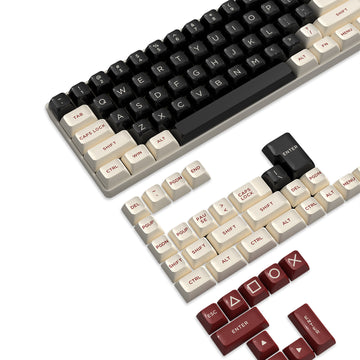
- Material de las teclas: Las teclas gruesas de PBT, como las que se encuentran en el ATTACK SHARK 120 Keys PBT Dye-Sublimation Pudding Keycaps Set, proporcionan un perfil acústico más profundo y un "golpe" táctil más sustancial al resetear, lo que ayuda a la confirmación de la habilidad.
El cuello de botella de la tasa de sondeo: 1000Hz vs. 8000Hz
Un interruptor rápido es tan efectivo como la capacidad del sistema para reportar su estado. La tasa de sondeo—la frecuencia con la que el teclado se comunica con la PC—es la última barrera del Ritmo de Enfriamiento.
Entendiendo la frontera técnica del 8K
La industria está actualmente en transición hacia el sondeo de 8000Hz (8K). Para entender el impacto, se deben observar los intervalos de sondeo:
- 1000Hz: intervalo de 1.0ms.
- 8000Hz: intervalo de 0.125ms.
Aunque el muestreo a 8K ofrece el seguimiento de entrada más granular disponible, introduce limitaciones significativas en el sistema. Según la Guía de Configuración del NVIDIA Reflex Analyzer, las altas tasas de muestreo estresan el procesamiento de Solicitudes de Interrupción (IRQ) de la CPU. Si el uso de la CPU del sistema ya está por encima del 80%, habilitar 8000Hz puede causar tartamudeo en los cuadros, lo cual es más perjudicial para el rendimiento que una tasa de muestreo ligeramente más lenta.
Además, los dispositivos 8K deben conectarse directamente a los puertos traseros de E/S de la placa base. Usar hubs USB o conectores frontales puede causar pérdida de paquetes debido al ancho de banda compartido y al mal blindaje, anulando efectivamente los beneficios de la señal de alta frecuencia.
Sinergia de Periféricos: El Ratón y la Alfombrilla
En juegos MOBA, el teclado maneja el tiempo de las habilidades, pero el ratón maneja el "dónde". La sinergia entre estos dos dispositivos es lo que crea una configuración de alto rendimiento.
Requisitos de DPI para Fidelidad de Píxeles
Para juego MOBA de alta sensibilidad (por ejemplo, una sensibilidad de 30cm/360), el sensor del ratón debe proporcionar suficiente resolución para evitar el "salto de píxeles" durante movimientos rápidos de cámara. En una pantalla 1440p con un campo de visión de 103°, nuestro modelo indica un requisito mínimo de ~1,550 DPI para mantener la fidelidad 1:1 de píxeles.
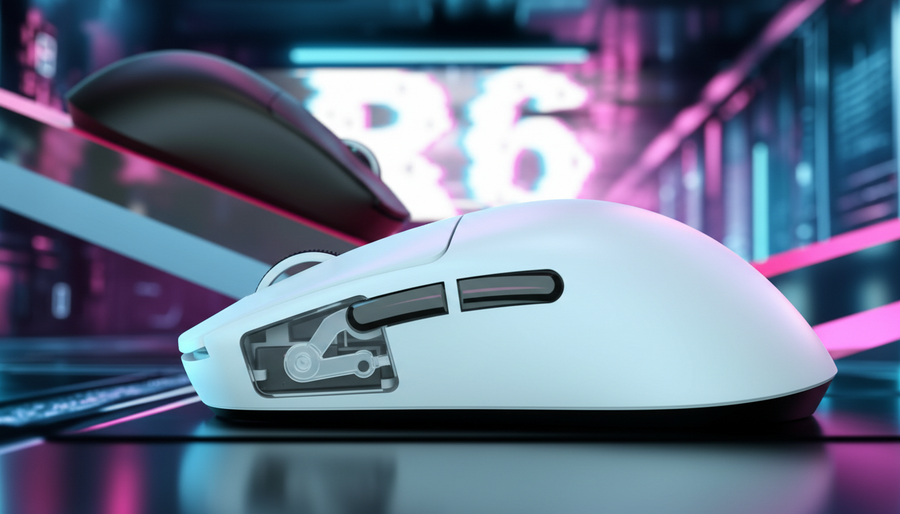
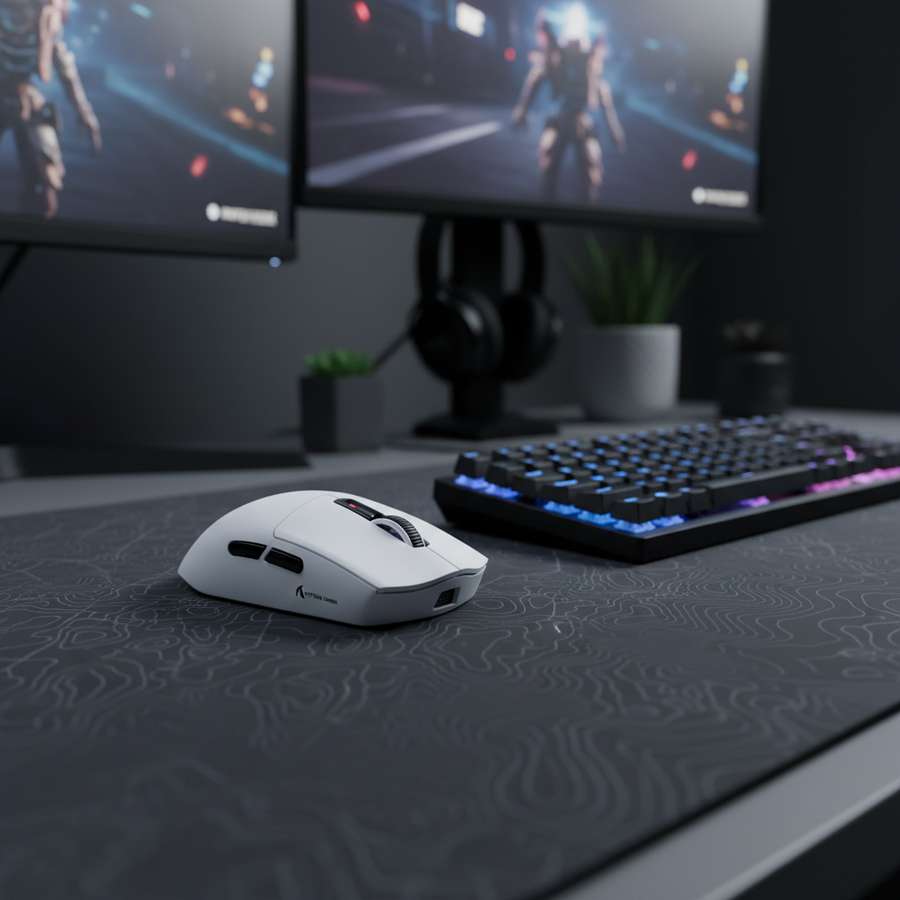
El ATTACK SHARK X8 Series Tri-mode Wireless Gaming Mouse aborda esto con sensores PixArt de alto rendimiento capaces de superar estos requisitos, asegurando que las microcorrecciones se traduzcan con precisión. Para maximizar esta precisión, se recomienda una superficie de fibra de alta densidad como el ATTACK SHARK CM02 eSport Gaming Mousepad para proporcionar un deslizamiento consistente y una respuesta completa de seguimiento.
Recomendaciones Estratégicas para Jugadores con Alto APM
Optimizar tu Cadencia de Enfriamiento requiere un enfoque integral que equilibre velocidad, durabilidad y estabilidad del sistema.
| Objetivo | Recomendación | Razonamiento Técnico |
|---|---|---|
| APM Máximo | Efecto Hall con Gatillo Rápido | Reduce la latencia de reinicio de ~3.3ms a ~0.7ms. |
| Resistencia | Peso del Resorte de 45g - 55g | Mantiene el Índice de Tensión por debajo de niveles peligrosos durante sesiones de más de 3 horas. |
| Estabilidad de Entrada | Frecuencia de sondeo de 1000Hz - 2000Hz | Proporciona un equilibrio de velocidad sin sobrecarga excesiva de CPU. |
| Precisión | 1600+ DPI en 1440p | Garantiza que el movimiento de la cámara supere el límite de muestreo de Nyquist-Shannon. |
Nota metodológica (DPI mínimo):
Nuestro cálculo de DPI aplica el teorema de muestreo de Nyquist-Shannon (DPI > 2 × píxeles por grado). Este es el límite matemático para evitar aliasing (saltos de píxeles) durante el movimiento. Aunque el control motor individual varía, configurar el hardware por encima de este umbral asegura que el cuello de botella sea el operador humano, no el sensor.
Para jugadores que buscan profundizar su comprensión de la biomecánica de los periféricos, recomendamos explorar nuestro análisis sobre Manos pequeñas, grandes movimientos: la biomecánica de la velocidad de microcorrección y nuestra guía sobre Ventaja competitiva: reducción de la fricción del interruptor para ediciones más rápidas.
Normas éticas y de seguridad
Al seleccionar periféricos de alto rendimiento, siempre verifique el cumplimiento con las normas internacionales. Para dispositivos inalámbricos, asegúrese de que cuenten con certificaciones válidas como FCC ID para EE. UU. o ISED REL para Canadá. Para ratones inalámbricos con batería de litio, la seguridad en el transporte debe cumplir con las normas UN 38.3 para garantizar la estabilidad durante el envío y uso.
Aviso legal: Este artículo es solo para fines informativos y no constituye asesoramiento médico o ergonómico profesional. Los riesgos de tensión biomecánica son estimaciones basadas en modelos de escenarios; las personas con condiciones preexistentes en la muñeca o la mano deben consultar a un profesional de la salud calificado antes de adoptar rutinas de juego de alta intensidad.