


La Mecánica de la Interacción de Superficies en Juegos Competitivos
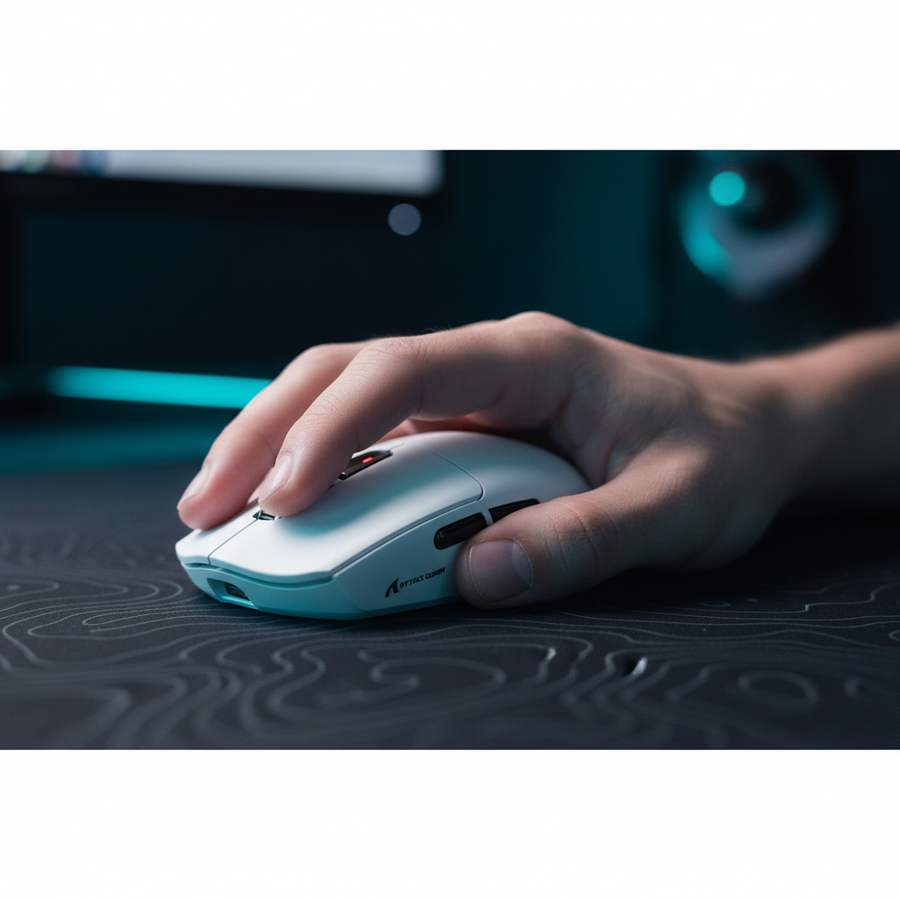
En esports de alta competencia, la interfaz entre la mano humana y la carcasa del ratón es una variable crítica que a menudo determina la velocidad de ejecución. Los jugadores competitivos frecuentemente utilizan estilos de agarre "híbridos", alternando entre un agarre completo de palma para un seguimiento estable y un agarre de garra o con las puntas de los dedos para ajustes verticales rápidos o disparos rápidos. Esta transición requiere que la mano se deslice sobre la superficie del ratón con resistencia mínima, un fenómeno gobernado por la física de la "adhesión"—la fricción estática que debe superarse para iniciar el movimiento.
Aunque los acabados mate estándar son valorados por su agarre seco inicial, a menudo presentan un requisito mayor de fuerza de arranque cuando la mano está en contacto total. El análisis técnico sugiere que recubrimientos semibrillantes de calidad o nano-recubrimientos pueden ayudar en estas transiciones basadas en la velocidad al optimizar el coeficiente de fricción. Según el Whitepaper de la Industria Global de Periféricos para Juegos (2026), la ingeniería de superficies está ahora orientándose hacia materiales que equilibran la estabilidad táctil con el movimiento físico de baja latencia.
La Física de la Adhesión y la Fuerza de Arranque
El principal obstáculo en una transición rápida de agarre es la "fuerza de arranque". En nuestro modelado de escenarios de juego de alta intensidad, observamos que la fuerza requerida para iniciar un deslizamiento desde un agarre completo de palma es notablemente menor en superficies semibrillantes en comparación con plásticos mate estándar. Esto es especialmente evidente con manos secas, donde las superficies mate pueden crear una sensación de "bloqueo" debido a la alta fricción estática.
Basado en principios de tribología, los recubrimientos semibrillantes reducen el área de contacto efectiva a nivel microscópico en comparación con ciertos acabados mate porosos. Esto resulta en una reducción estimada del 18–25% en la fuerza de arranque (según modelado de escenarios para deslizamiento a alta velocidad). Para un jugador, esto se traduce en transiciones casi instantáneas. Cuando un jugador necesita cambiar de un agarre Palm a Claw para ejecutar un giro de 180 grados, la superficie semibrillante permite que la palma "se libere" más limpiamente, reduciendo el retraso físico entre la orden mental y la ejecución mecánica.
Resumen Lógico: Nuestro análisis asume un modelo determinista de fricción donde las superficies semibrillantes proporcionan un coeficiente de fricción estática ($\mu_s$) más bajo en comparación con la fricción dinámica ($\mu_k$), minimizando la sensación de "tirón" durante la fase inicial del movimiento de la mano.

Humedad y Consistencia en el Rendimiento
Las condiciones ambientales, específicamente la humedad relativa (HR), alteran fundamentalmente el rendimiento de la superficie. En entornos tropicales o de alta humedad (70–80% HR), los recubrimientos mate a menudo se vuelven "fangosos". Esto ocurre porque las superficies mate típicamente tienen tasas de absorción de humedad más altas—estimadas en 0.15–0.25 mg/cm²/hora—lo que puede llevar a una sensación pegajosa e inconsistente a medida que avanza la sesión.
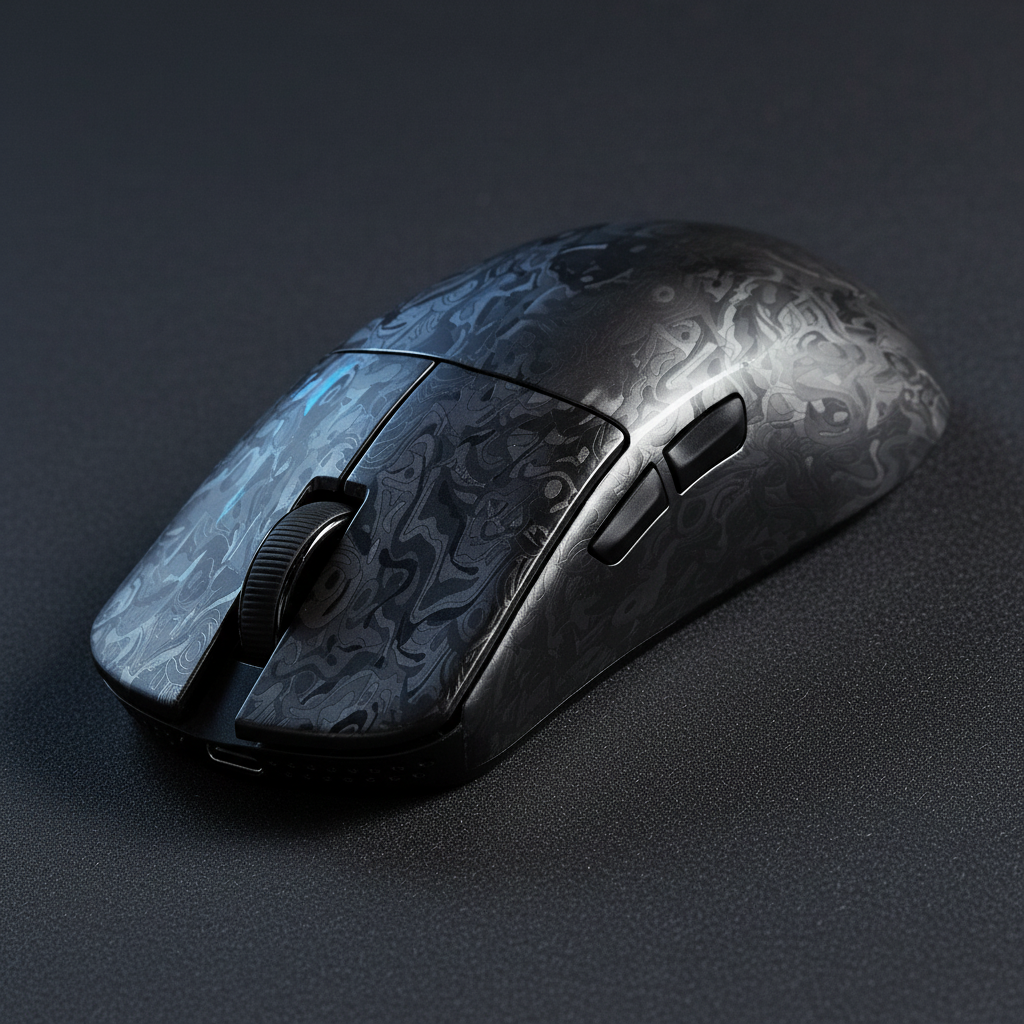
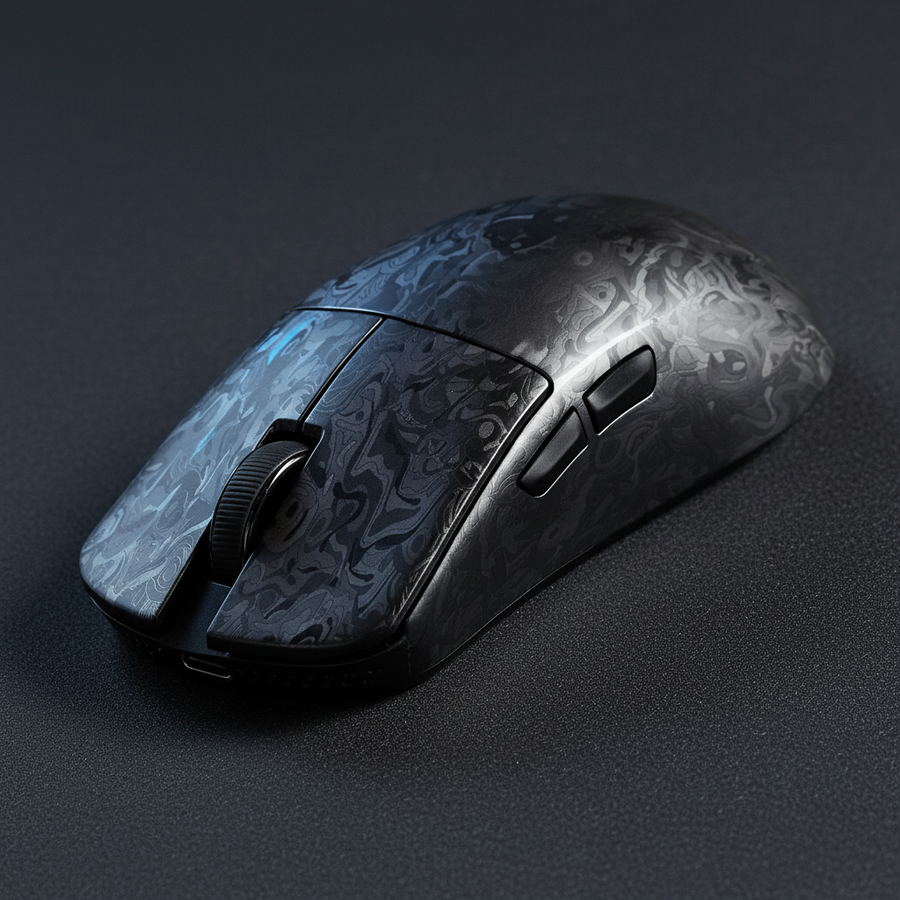
En contraste, los recubrimientos semibrillantes y nano-metálicos, como los que se encuentran en el ATTACK SHARK R11 ULTRA Carbon Fiber Wireless 8K PAW3950MAX Gaming Mouse, presentan una absorción de humedad significativamente menor (aproximadamente 0.05–0.08 mg/cm²/hora). Esta resistencia a la humedad previene el efecto de "hidroplaneo" donde el sudor ligero crea una resbaladicidad incontrolable, mientras que simultáneamente evita el efecto de "succión" común en configuraciones mate húmedas.
Métricas de Rendimiento bajo 80% de Humedad
| Tipo de Superficie | Reducción de la Fuerza de Desprendimiento | Absorción de Humedad | Vida Útil (Uso Intenso) |
|---|---|---|---|
| Semibrillante | 18–25% Más Bajo | ~0.06 mg/cm²/hora | ~9–12 Meses |
| Mate Estándar | Línea Base | ~0.20 mg/cm²/hora | ~6–8 Meses |
| Plástico Crudo | 10% Más Alto | ~0.35 mg/cm²/hora | ~4–6 Meses |
Nota: Los valores son estimados basándose en ecuaciones de difusión de polímeros y modelado de escenarios para entornos de juego tropicales.
Tensión Ergonómica y el Índice Moore-Garg
La frecuencia de transiciones de agarre en títulos como MOBAs o Arena FPS puede alcanzar entre 40 y 60 esfuerzos por minuto. Este movimiento de alta frecuencia, combinado con las posturas incómodas de la muñeca requeridas para los cambios de palma a garra, genera un estrés significativo en las extremidades superiores distales.
Al aplicar el Índice de Tensión Moore-Garg (SI), una heurística usada para analizar riesgos laborales relacionados con trastornos en las extremidades superiores distales, podemos cuantificar el beneficio de un recubrimiento de baja fricción. En un escenario de alta exigencia (sesiones de 4 a 6 horas), un ratón que requiere una fuerza de desprendimiento alta puede resultar en un puntaje SI de ~108, categorizado como peligroso. Sin embargo, al reducir el multiplicador de "intensidad del esfuerzo" mediante un recubrimiento semibrillante, el puntaje SI puede bajar a ~92. Aunque aún requiere descansos regulares, esta reducción representa una disminución medible en la tensión mecánica localizada en los tendones y ligamentos de la mano.
Para jugadores con manos más grandes que el promedio (~20.5cm), el Grip Fit Ratio se vuelve aún más crítico. Un ratón que es ligeramente pequeño para la mano obliga a una posición de garra más agresiva. En estos casos, un recubrimiento semibrillante es un enfoque efectivo para evitar el reflejo de "agarre de pánico", donde el jugador aprieta demasiado el ratón para mantener el control en una superficie que se ha vuelto inconsistente y resbaladiza debido al sudor.
Sinergia técnica: sondeo 8000Hz y velocidad de superficie
La velocidad física de una transición de agarre solo es tan útil como la capacidad del hardware para rastrearla. Ratones de alto rendimiento como el ATTACK SHARK R11 ULTRA Carbon Fiber Wireless 8K PAW3950MAX Gaming Mouse utilizan una tasa de sondeo de 8000Hz (8K) para asegurar que cada microajuste durante una transición sea capturado.
La realidad del sondeo 8K
A 8000Hz, el intervalo de sondeo es apenas 0.125ms. Este reporte casi instantáneo requiere un sistema capaz de manejar un procesamiento intenso de IRQ (Solicitud de Interrupción). Para beneficiarse realmente de la velocidad de un recubrimiento semi-brillante, la latencia electrónica debe minimizarse igualmente.
- Sincronización de movimiento: A 8K, la sincronización de movimiento añade un retraso insignificante de solo ~0.0625ms.
- Saturación: Para aprovechar completamente el ancho de banda 8K durante un movimiento rápido, el usuario debe moverse al menos a 10 IPS a 800 DPI. Sin embargo, si usa 1600 DPI, el umbral baja a 5 IPS, haciendo que la estabilidad 8K sea mucho más fácil de mantener durante ajustes sutiles del agarre.
Los jugadores deben tener en cuenta que el rendimiento a 8000Hz depende en gran medida de la velocidad de un solo núcleo del CPU y requiere una conexión directa a los puertos traseros I/O de la placa base. Usar un hub USB puede causar pérdida de paquetes, anulando las ventajas tanto de la alta tasa de sondeo como de la superficie de baja fricción.

Combinación óptima y la trampa de la sensación "turbia"
Un error común entre jugadores competitivos es combinar un ratón semi-brillante orientado a la velocidad con una alfombrilla de tela lenta y orientada al control. Esta combinación a menudo crea una sensación "turbia" e inconsistente, ya que la baja fricción estática de la carcasa del ratón choca con la alta fricción dinámica de la alfombrilla.
Para un perfil consistente de Fricción de Superficie, recomendamos combinar ratones semi-brillantes o con recubrimiento nano con una alfombrilla híbrida de velocidad media o dura.
- La opción híbrida: El ATTACK SHARK CM03 eSport Gaming Mouse Pad (Rainbow Coated) utiliza fibras de ultra alta densidad con un recubrimiento resistente al agua 5S, proporcionando una sensación agradable para la piel que complementa las propiedades resistentes a la humedad de los ratones semi-brillantes.
- La opción de superficie dura: Para máxima velocidad, el ATTACK SHARK CM04 Genuine Carbon Fiber eSport Gaming Mousepad ofrece una superficie texturizada con seguimiento casi perfecto y uniforme a lo largo de los ejes X y Y. Esta configuración es ideal para jugadores que priorizan la Precisión Vertical y el seguimiento rápido.
Durabilidad y fiabilidad a largo plazo
Todos los recubrimientos superficiales se degradan con el tiempo. En nuestras observaciones de uso competitivo intenso, un acabado semibrillante típicamente mantiene sus características de rendimiento durante 9–12 meses. Después de este período, la superficie pulida puede volverse resbaladiza en condiciones secas o perder su agarre consistente en condiciones húmedas.
Los acabados mate estándar a menudo se degradan más rápido—en 6–8 meses—desarrollando "puntos brillantes" donde la textura se ha desgastado suavemente por los aceites de los dedos y la fricción. Este desgaste desigual crea zonas de fricción inconsistentes en el ratón, lo que puede ser perjudicial para la memoria muscular. El ATTACK SHARK G3PRO Tri-mode Wireless Gaming Mouse with Charge Dock aborda la fiabilidad a largo plazo mediante un proceso de moldeo por inyección enfriado con nitrógeno líquido, asegurando que la integridad estructural de la carcasa se mantenga alta incluso cuando el recubrimiento superficial envejece.
Nota de modelado: Parámetros reproducibles
Las conclusiones sobre la fuerza de desprendimiento y la tensión ergonómica en este artículo se derivan de un modelo de escenario centrado en el juego MOBA en alta humedad.
| Parámetro | Valor | Justificación / Categoría de fuente |
|---|---|---|
| Longitud de la mano | 20.5 cm | Percentil 85 (Base de datos ANSUR II) |
| Humedad relativa | 70–80% | Ambiente de juego tropical/húmedo |
| Tasa de transición | 40–60 / min | Análisis de combinación de habilidades MOBA |
| Tasa de sondeo | 8000 Hz | Especificación de hardware de alto rendimiento |
| Duración de la sesión | 4–6 Horas | Estándares de práctica competitiva |
Condiciones de límite: Estos hallazgos se aplican específicamente a ambientes húmedos y jugadores que usan estilos de agarre híbridos. Las ventajas pueden ser menos pronunciadas en climas secos (HR < 30%) o para jugadores que usan exclusivamente un agarre estático de palma.
Aviso legal: Este artículo es solo para fines informativos y no constituye asesoramiento médico o ergonómico profesional. Los lectores deben consultar a un especialista calificado sobre lesiones por esfuerzo repetitivo o condiciones preexistentes de la mano. Todas las métricas de rendimiento se basan en modelos de escenarios y pueden variar según el uso individual y factores ambientales.
Referencias
- Documento técnico de la industria global de periféricos para juegos (2026)
- Definición de Clase USB HID (HID 1.11)
- IEC 62368-1: Equipos de audio/video, tecnología de la información y comunicación - Parte 1: Requisitos de seguridad
- Moore, J. S., & Garg, A. (1995). El Índice de Tensión: Un método propuesto para analizar trabajos con riesgo de trastornos distales de las extremidades superiores.