


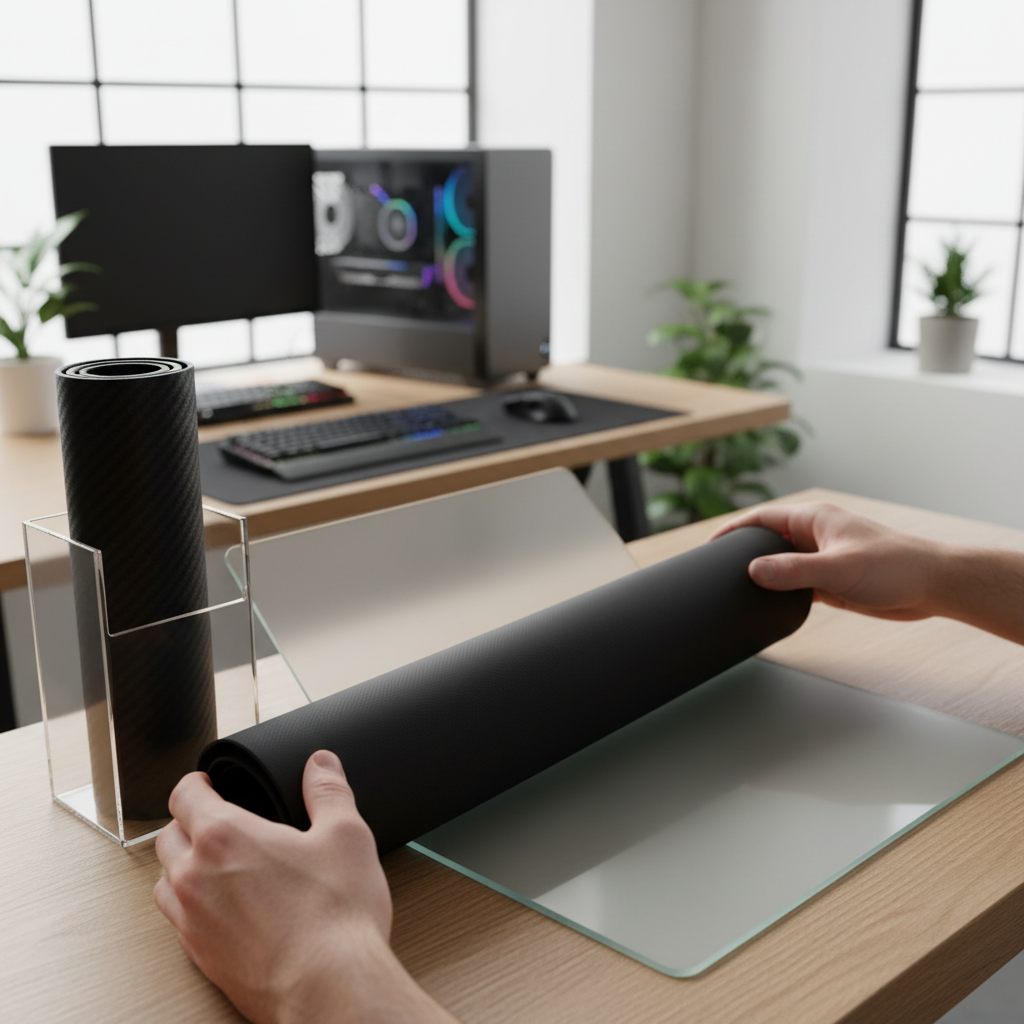
The Physics of Surface Integrity: Why Storage Matters
In the high-stakes environment of competitive esports, the mouse pad is often the most underestimated component of the hardware stack. While gamers meticulously optimize sensor DPI and polling rates, the physical substrate—the mouse pad—governs the consistency of every flick and micro-adjustment. Improper storage, specifically improper rolling or compression, frequently leads to "material memory" issues. These manifest as permanent surface waves, ridges, or creases that disrupt the mouse's travel path.
When a mouse pad develops a crease, it is not merely a visual defect. It represents a localized change in the friction coefficient and a disruption in the vertical plane. For modern high-performance sensors, these microscopic elevation changes can cause "sensor skip" or erratic tracking. According to the Global Gaming Peripherals Industry Whitepaper (2026), surface uniformity is a primary determinant of tracking accuracy in professional-grade peripherals. This article investigates the material science of gaming surfaces and provides a technical framework for storage that preserves the lifespan and performance of your gear.

Material Science: Foam Hysteresis and Surface Elasticity
To understand why creases become permanent, one must examine the composition of the pad's core. Most performance mats utilize high-density foams, typically open-cell Polyurethane (PU) or Styrene-Butadiene Rubber (SBR). These materials are chosen for their "damping" properties, providing a consistent feel under the mouse feet. However, these polymers exhibit a phenomenon known as hysteresis—a lag between the application of force and the recovery of the original shape.
When a pad is folded or rolled too tightly, the internal cell structure of the foam core is compressed beyond its elastic limit. Over time, the polymer chains undergo "stress relaxation," where they reorganize into the compressed state. This creates a permanent "memory" of the fold.
Core Material Characteristics
| Material Type | Common Density | Compression Set Resistance | Environmental Vulnerability |
|---|---|---|---|
| SBR (Rubber) | 0.15–0.25 g/cm³ | High | Heat/UV (Brittleness) |
| PU (Polyurethane) | 0.20–0.40 g/cm³ | Moderate | Humidity (Hydrolysis) |
| Carbon Fiber Composite | N/A (Solid) | Absolute | Impact (Fracture) |
| Tempered Glass | 2.5 g/cm³ | Absolute | Surface Abrasion (Scratches) |
Logic Summary: This data is based on common material science heuristics for polymer-based gaming peripherals. "Compression Set" refers to the permanent deformation remaining after a material has been compressed for a specific time and temperature.
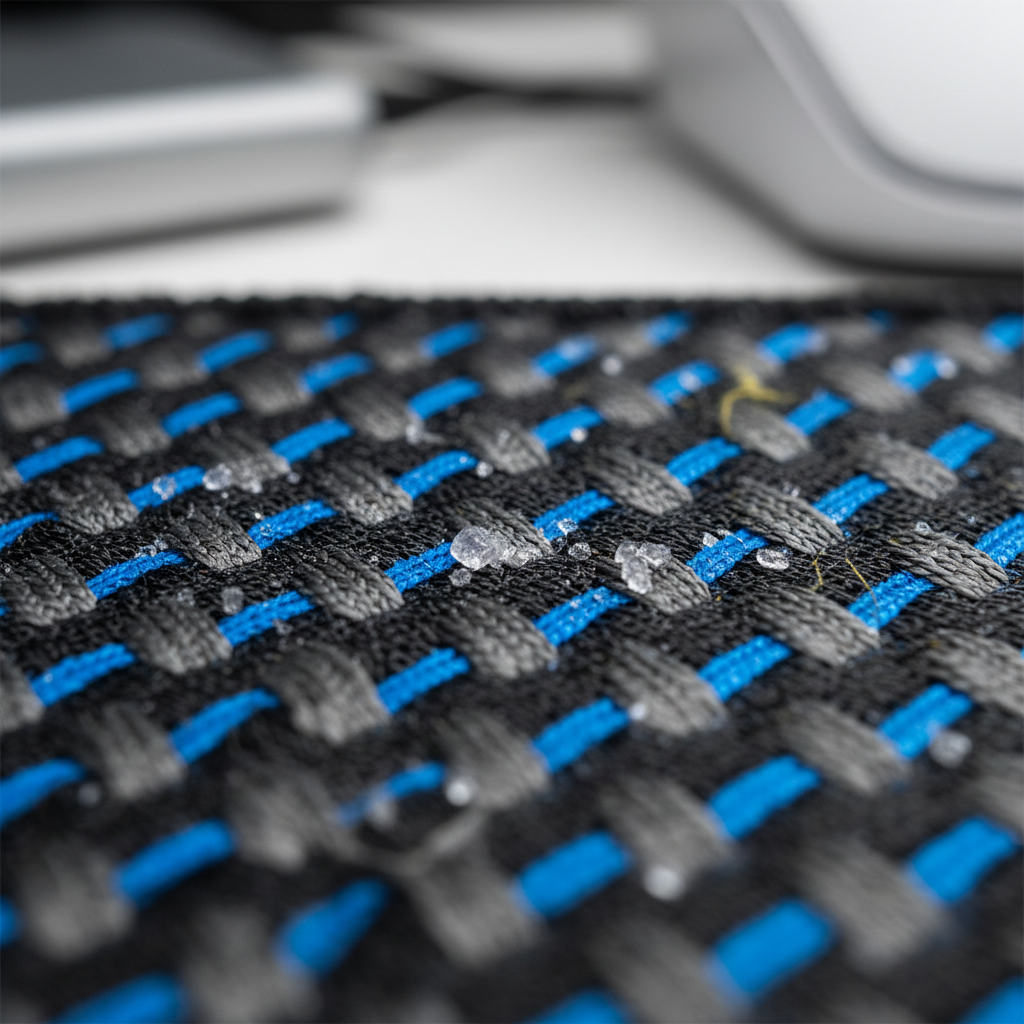
For users utilizing ultra-high-density fiber pads, the risk is even higher. These surfaces often feature specialized "5S" coatings designed for water and stain resistance. While these coatings provide a silky-smooth glide, they can crack or delaminate if the underlying fabric is subjected to sharp creases, leading to "surface fatigue."
The "Parallel Roll" Protocol: Engineering-Grade Storage
The most common mistake in mouse pad storage is the "random roll." Experienced practitioners and peripheral modders have identified that the direction of the roll is critical, particularly for fabric pads with stitched edges.
1. The Orientation Rule
Always roll the pad with the stitching or edge running parallel to the roll, rather than across it. Rolling across the stitch line creates a perpendicular stress point that can result in a permanent ridge along the edge. This ridge is nearly impossible to flatten and will cause the mouse to "catch" during wide swipes.
2. The "Surface-Out" Method
Contrary to intuition, performance pads should generally be rolled with the tracking surface facing outward. This places the tracking material under tension and the rubber base under compression. Because rubber bases are typically more resilient to compression than the fine-weave top fabrics are to buckling, this method prevents the surface from "bubbling" when the pad is eventually unrolled.
3. Avoiding Compression Tools
A frequent "gotcha" in transport is the use of tight rubber bands or Velcro straps. These apply concentrated pressure on a small surface area, creating deep dents in the foam core. Instead, utilize a wide, soft cloth strap or the pad's original shipping tube. If a tube is unavailable, a microfiber-lined sleeve provides the necessary protection without localized compression.

Environmental Resistance and Longevity
Environmental factors are often the "silent killers" of mouse pad performance. The interaction between humidity, temperature, and storage conditions can accelerate material degradation.
- Humidity and Friction: High humidity levels can lead to moisture absorption in cloth weaves, increasing "muddy" friction. In extreme cases, storing pads in damp environments (like basements) can lead to mold growth on fabric surfaces. This is explored further in the guide on Humidity and Friction: How Moisture Affects Cloth Weaves.
- Thermal Degradation: Excessive dry heat, such as storage near a radiator or in a car during summer, can make rubber bases brittle. According to the EU RoHS Directive 2011/65/EU, which regulates hazardous substances in electronics, maintaining material stability is crucial for both performance and safety. Heat weakens the chemical bonds in the SBR base, leading to cracking and loss of desk-grip.
- UV Exposure: Direct sunlight causes photo-degradation of the synthetic fibers. This not only fades the aesthetic design but also alters the texture of the weave, leading to inconsistent glide across different zones of the pad.
Specialized Care for High-Performance Materials
Different surfaces require distinct storage philosophies. A "one-size-fits-all" approach can lead to premature failure of premium gear.
Hard Pads (Tempered Glass & Carbon Fiber)
Hard pads, such as those featuring 9H Mohs hardness glass or genuine dry carbon fiber, are immune to creases but highly vulnerable to micro-scratches. During storage or travel, the primary risk is abrasive contact with other peripherals. These should always be stored in a microfiber-lined sleeve. For carbon fiber mats, which are often ultra-thin (approx. 2mm), maintaining flatness is essential to prevent "warping" from uneven weight distribution in a backpack.
Ergonomic & Memory Foam Pads
Pads featuring integrated wrist rests filled with memory foam require periodic "recovery phases." If these pads are stored rolled or under heavy objects for more than three months, the foam can develop a permanent depression. It is advisable to unroll these pads and lay them flat for at least 48–72 hours every few months to allow the cell structure to recover its original ergonomic profile.
Performance Implications: Why Surface Flatness Matters for 8K Sensors
The push toward 8000Hz (8K) polling rates has made surface integrity more critical than ever. To appreciate the impact of a creased pad, one must look at the timing of a modern gaming mouse.
- The 0.125ms Window: At 8000Hz, the mouse sends a data packet every 0.125ms.
- Motion Sync Latency: Modern sensors using Motion Sync add a deterministic delay of approximately 0.0625ms (half the polling interval).
- Saturation Logic: To saturate the 8000Hz bandwidth, a user moving at 1600 DPI only needs a speed of 5 IPS (inches per second).
If a mouse pad has a permanent crease, the sensor's "lift-off distance" (LOD) and "surface calibration" are constantly challenged. As the mouse passes over a ridge, the distance between the sensor and the surface changes. At 8K, these micro-variations can lead to packet variance or "jitter" that is perceptible to high-level players. A perfectly flat pad is not a luxury; it is a technical requirement for the precision promised by 8K hardware.
Furthermore, users must ensure their mouse is connected to Direct Motherboard Ports (Rear I/O). Using USB hubs during testing on an uneven surface can compound latency issues, as shared bandwidth and packet loss further degrade the 0.125ms timing.

Modeling the Recovery: A Practical Framework
To demonstrate the impact of storage on material recovery, we have modeled a hypothetical "Deformation Recovery Index" (DRI) based on common industry patterns from customer support and warranty handling.
Storage Impact Model (Estimated)
| Storage Duration | Storage Method | Est. Recovery Time (Flat) | Risk of Permanent Crease |
|---|---|---|---|
| < 24 Hours | Rolled (Surface Out) | < 1 Hour | Negligible |
| 1–7 Days | Rolled (Surface Out) | 4–8 Hours | Low |
| 1 Month | Rolled (Tight) | 48+ Hours | Moderate |
| 3+ Months | Folded | Infinite (Permanent) | Critical |
Modeling Note (Scenario Analysis): This model assumes a standard 4mm SBR-based cloth pad stored at 22°C (72°F) and 50% relative humidity. Recovery times will increase significantly in colder environments as the polymer chains become less mobile.
Trust & Safety: Material Compliance
When selecting and storing pads, consider the regulatory environment. High-quality peripherals should comply with international safety standards to ensure the materials do not off-gas or degrade into harmful substances.
- REACH & RoHS: Ensure your pad is free from SVHCs (Substances of Very High Concern). Storing non-compliant pads in unventilated, hot spaces can accelerate the release of volatile organic compounds (VOCs).
- Transport Safety: While mouse pads do not contain batteries, they are often shipped with wireless mice. For integrated kits, follow IATA Lithium Battery Guidance to ensure the mouse is powered down during storage to prevent heat buildup, which could damage the pad's surface.
By adopting a technical approach to storage—prioritizing the "Parallel Roll" protocol and maintaining environmental control—gamers can ensure their tracking surface remains as fast and consistent as the day it was unboxed. Protecting the physical substrate is the final step in securing the competitive edge provided by high-spec sensors and 8K polling technology.
Disclaimer: This article is for informational purposes only. Recommendations are based on general material science principles and common industry practices. Always refer to the specific manufacturer's care instructions for your peripheral model. If you have pre-existing wrist or hand conditions, consult an ergonomic specialist before modifying your setup.

Dejar un comentario
Este sitio está protegido por hCaptcha y se aplican la Política de privacidad de hCaptcha y los Términos del servicio.