

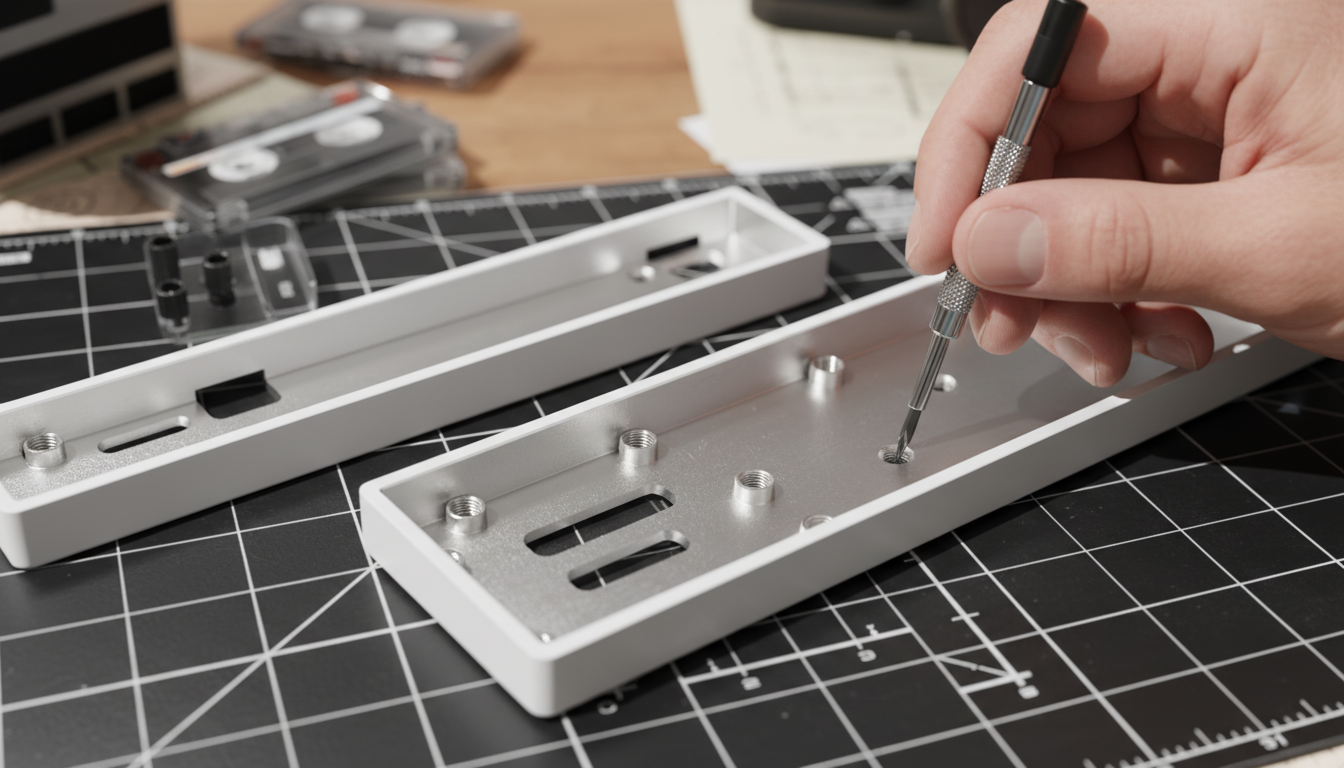
Engineering Thread Integrity in Aluminum Chassis
The durability of a mechanical keyboard is often judged by its switch lifespan or the thickness of its keycaps, but for enthusiasts who prioritize frequent modification, the true failure point often lies in the screw threads of the aluminum chassis. Premium metal keyboards, typically machined from 6061 or 7075 aluminum, offer exceptional rigidity but present unique mechanical challenges during repeated disassembly. Unlike steel, aluminum is a relatively soft non-ferrous metal, making its internal threads susceptible to stripping and galling if maintenance protocols are ignored.
Quick Start: 5 Rules for Thread Longevity
For those looking for immediate solutions to prevent stripped screws, follow these engineering-based practices:
- The 1.5x Rule: Ensure the screw engages with at least 1.5x its diameter in depth (e.g., 4.5mm for an M3 screw).
- Finger-Tight Finish: Tighten until the screw stops, then add no more than an 1/8th turn.
- Reverse-Thread Entry: Turn the screw backward until you feel a "click" (the thread alignment) before driving it in.
- Use Low-Strength Locker: Apply a small amount of Loctite 222 (purple) to prevent vibration backing without seizing.
- Match Driver Quality: Use precision-machined hex or Torx bits; rounded tools are a primary cause of off-axis thread damage.
The Mechanics of Thread Engagement and Pull-Out Strength
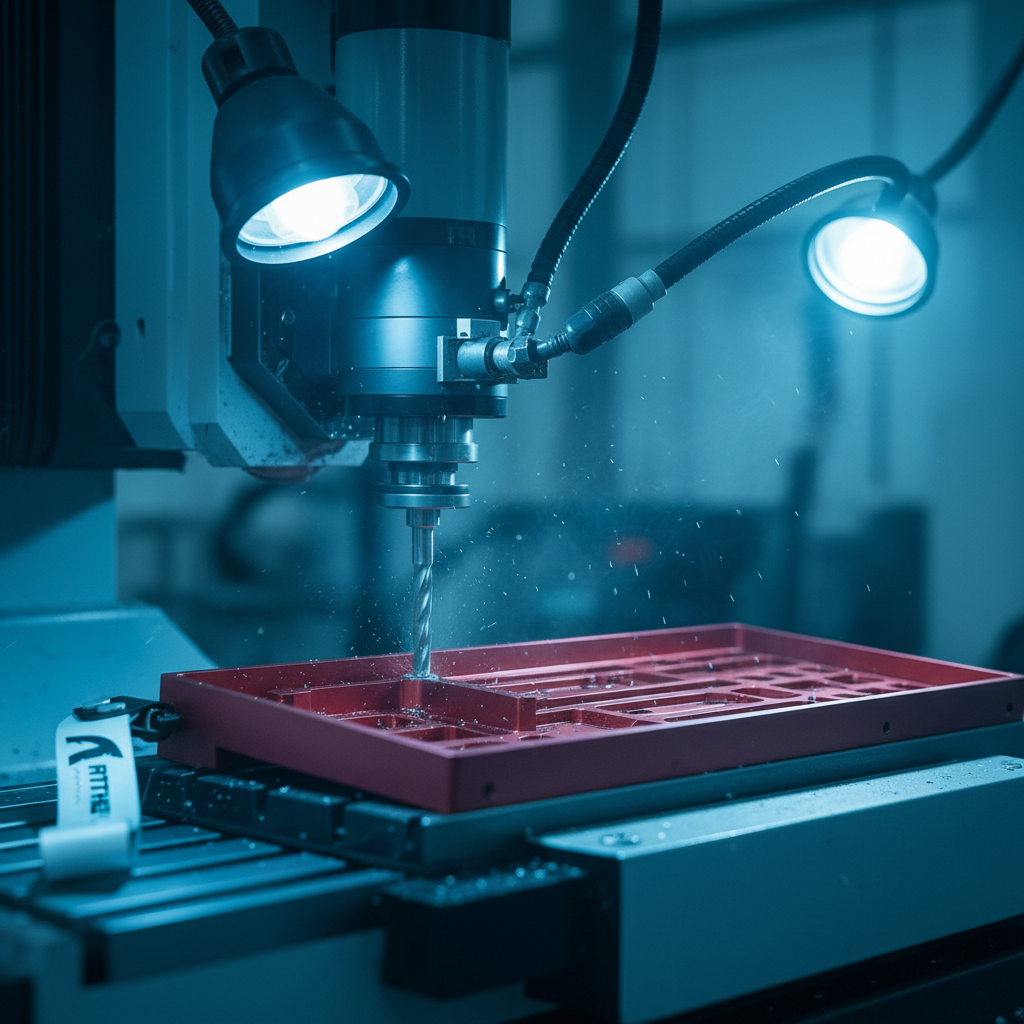
In premium keyboard construction, thread engagement refers to the contact area between the male screw and the female internal threads. A common pitfall in budget manufacturing is the use of oversized tap drills. While larger pilot holes reduce the risk of breaking expensive CNC taps during production, they may leave less than the industry-standard 75% thread engagement, which can significantly reduce the pull-out strength of the fastener.
The 75% Rule and Pilot Hole Precision
For a standard M3 screw, the choice of a pilot hole diameter is critical. In 6061-T6 aluminum, a 2.5mm pilot hole is often considered the "standard" for general assembly. However, for higher durability, some manufacturers utilize a 2.4mm pilot hole to increase thread engagement.
Heuristic Calculation for Engagement Depth: To achieve maximum pull-out strength in softer alloys like aluminum, engineers typically use the following formula for minimum engagement length ($L_e$):
$L_e = 1.5 \times D$ (Where $D$ is the nominal diameter of the screw)
For an M3 screw, the engagement length should ideally be 4.5mm. If your case design provides less than 3mm of engagement, the risk of stripping during high-torque scenarios increases substantially.
Comparative Analysis: Threading Methods
| Feature | Direct-Threaded Aluminum | Brass Threaded Inserts | Helicoil (Repair/Reinforced) |
|---|---|---|---|
| Durability | Moderate; sensitive to torque | High; steel-on-brass contact | Very High; provides steel threads |
| Precision | High (CNC-integrated) | Moderate (Press-fit/Thermal) | High (Post-process) |
| Failure Risk | Higher (Can strip in <15 cycles if over-torqued) | Low (Insert may spin if loose) | Minimal |
| Modder Preference | Standard for sleek aesthetics | Preferred for frequent swaps | The "Gold Standard" for repairs |
Note: Failure risk is an estimate based on common workshop patterns; actual lifespan depends on alloy grade and user torque application.
While direct threading is common for its aesthetic cleanliness, many high-end boards utilize brass inserts or stainless steel Helicoils. These allow for steel-on-metal contact, which is more resistant to the friction-induced wear that occurs during repeated maintenance.
Maintenance Protocols for High-Frequency Modders
For users who frequently disassemble their boards, maintenance habits are as important as the hardware itself.
The Role of Thread-Locking Compounds
Vibration from typing can cause screws to back out. For aluminum keyboard cases, a low-strength anaerobic compound like Loctite 222 is recommended. Based on manufacturer specifications, this provides enough resistance to prevent loosening while allowing for removal with standard hand tools.
Cautionary Steps:
- Wicking Risk: Excess liquid can migrate into stabilizers or switches. Use a toothpick to apply a microscopic amount only to the screw threads.
- Primer Requirements: Because aluminum is "inactive" compared to steel, anaerobic lockers may take longer to cure. For critical applications, a primer (like Loctite SF 7471) may be necessary, though it is often overkill for keyboard chassis.
Repairing Stripped Aluminum Threads
If a thread does strip, the damage can often be mitigated. There are two primary schools of thought for repair:
- Re-tapping: Drilling the hole out and tapping it for a larger screw (e.g., M3 to M4). While effective, it alters the case's aesthetic symmetry and requires more wall thickness.
- Helicoils: According to the technical guide at Engineer Fix, Helicoils are often superior because they restore the original screw dimension using a stainless steel insert. This provides a thread that is typically stronger than the original aluminum.
Chemical "First-Aid": In cases where the thread is only slightly loose, high-strength retaining compounds (like Loctite 638) are sometimes used as a "filler." In internal workshop tests, this can restore a functional level of grip for non-structural screws, but it should be viewed as a temporary heuristic rather than a permanent mechanical fix.
Compliance and Long-Term Reliability
Beyond mechanical durability, premium peripherals must adhere to global safety standards. For keyboards featuring wireless connectivity, compliance with IATA Lithium Battery Guidance (UN 38.3 testing) and FCC Equipment Authorization is a hallmark of engineering quality.
Furthermore, enthusiasts should consult guides on Preventing Aluminum Oxidation (an Attack Shark company blog) to ensure that environmental corrosion doesn't compromise thread integrity over time.
Appendix: Peripheral Performance & Ergonomics
While not directly related to thread durability, the following data provides context for the high-performance ecosystem often inhabited by keyboard modders.
Modeling 8000Hz Polling
The move from 1000Hz to 8000Hz reduces polling intervals from 1.0ms to 0.125ms. According to the Global Gaming Peripherals Industry Whitepaper (2026)—a report published by Attack Shark—this shift significantly improves sensor consistency.
Ergonomics and Tool Handling
For enthusiasts with large hands (~20.5cm, 95th percentile male per ANSUR II), tool handling precision is vital. A grip fit ratio of ~0.95 (mouse/tool length of ~125mm) is suggested for maintaining the fine motor control required for delicate keyboard repairs without applying excessive off-axis torque. For more on build quality perception, see Measuring Tolerances: A Guide to Gap Consistency.
Disclaimer: This article is for informational purposes only. Modifying or disassembling electronic devices may void warranties. Always refer to the manufacturer's specific guidelines before performing maintenance.
Sources
- Attack Shark Blog: Global Gaming Peripherals Industry Whitepaper (2026)
- USB-IF: USB Device Class Definition for HID 1.11
- IATA: Lithium Battery Guidance Document
- Engineer Fix: How to Repair a Stripped Thread with a Helicoil
- FCC: Equipment Authorization Search
- Tooling Reference: Thread Engagement Length Calculator

Dejar un comentario
Este sitio está protegido por hCaptcha y se aplican la Política de privacidad de hCaptcha y los Términos del servicio.