

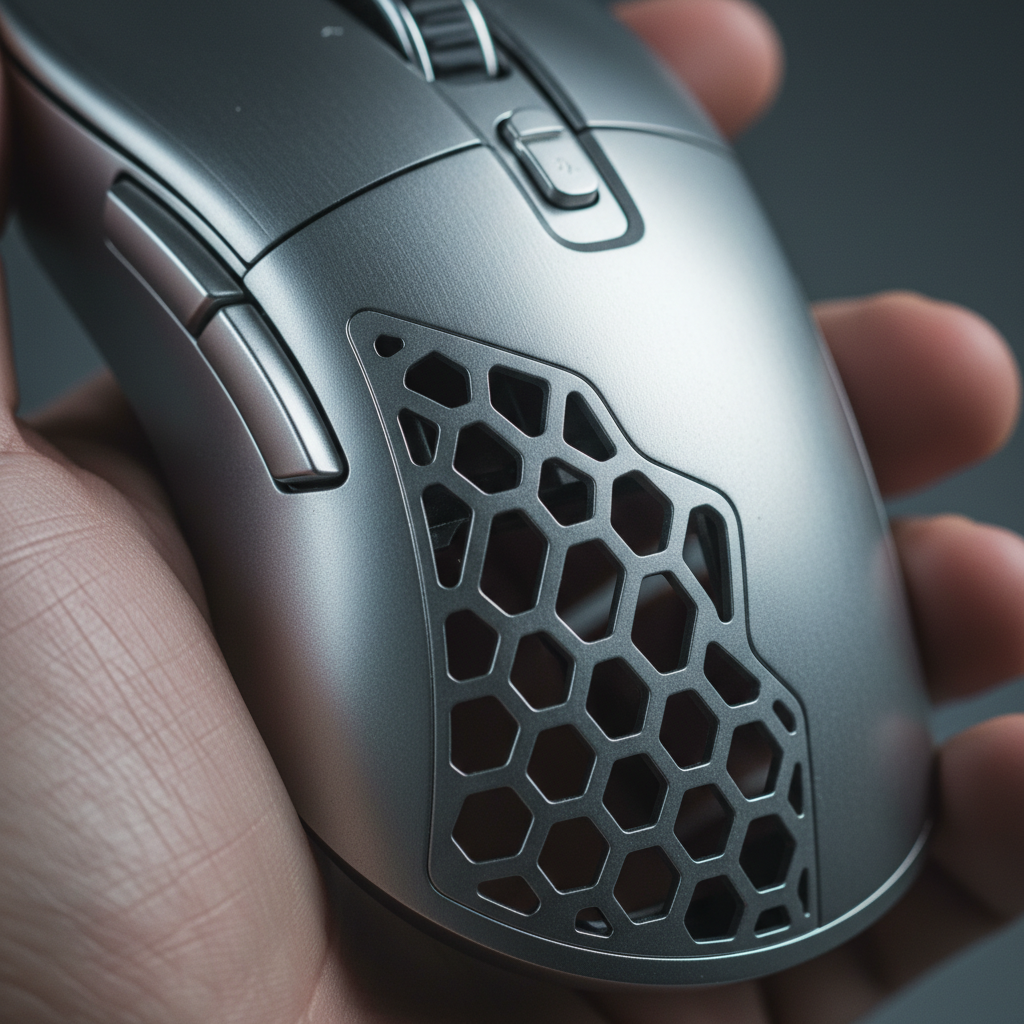
Summary: Is a Magnesium Mouse Right for You?
Magnesium alloy mice offer the industry's best strength-to-weight ratio, but they require more maintenance than standard plastic. For users prioritizing performance, here is the quick verdict:
- Best For: Competitive players seeking sub-40g weights and maximum shell rigidity for 8000Hz sensors.
- Main Risk: Surface oxidation and "pitting" caused by acidic sweat (pH < 5.5) and high-intensity friction.
-
Maintenance Checklist:
- [ ] Clean Weekly: Use a microfiber cloth dampened with pH-neutral soap.
- [ ] Avoid Solvents: Never use >70% Isopropyl alcohol or ammonia-based cleaners.
- [ ] Dry After Use: If you have "sweaty palms," wipe the shell dry after long sessions.
- [ ] Monitor Coating: Perform the "thumbnail test" (see below) to check for early finish degradation.
The Engineering Paradox of Magnesium Alloys in High-Performance Peripherals
The pursuit of the "zero-gram" mouse has led the gaming peripheral industry toward exotic materials once reserved for aerospace and high-end automotive engineering. Magnesium alloy has emerged as a premier choice for enthusiasts seeking the ultimate strength-to-weight ratio. However, as these devices move from niche boutique runs to broader availability, a critical technical discourse has emerged regarding their long-term durability. Unlike traditional injection-molded plastics, magnesium is a chemically active metal that requires sophisticated surface engineering to survive the rigors of daily human contact.
This technical analysis investigates the lifecycle of magnesium mouse shells, focusing on surface oxidation, coating degradation, and the environmental factors that accelerate wear. By examining the material science and modeling real-world usage scenarios, this article provides a framework for understanding how these premium chassis behave over years of intensive competitive use.
Material Composition and Inherent Vulnerabilities
Most high-end gaming mice utilize a magnesium-aluminum-zinc alloy, typically categorized under the AZ series (such as AZ61 or AZ91). According to the Global Gaming Peripherals Industry Whitepaper (2026), the inclusion of aluminum (typically 6-9%) is essential for structural rigidity, while small additions of calcium or rare-earth elements are often used to improve corrosion resistance during the die-casting process.
However, a fundamental trade-off exists within these alloys. While increasing aluminum content improves the metal's resistance to general atmospheric corrosion, it can simultaneously reduce ductility and increase the brittleness of the shell (as noted in typical AZ91 metallurgical profiles). This makes the mouse more susceptible to micro-fractures during high-impact clicks or accidental drops.
Furthermore, magnesium is naturally prone to oxidation. In its raw state, it reacts with oxygen to form a thin layer of magnesium oxide (MgO). While this layer provides a baseline level of protection, research from the Oak Ridge National Laboratory (ORNL) indicates that in humid environments, the stability of this oxide layer is compromised. The presence of CO2 in the atmosphere can accelerate corrosion kinetics through a process known as carbonation, a factor that many standard protective coatings struggle to fully mitigate.
Scenario Modeling: The Accelerated Wear Profile
To understand how these material properties translate to the real world, we modeled a high-stress usage scenario involving a competitive gamer. This analysis demonstrates how mechanical stress and biological factors converge to potentially degrade magnesium surfaces.
Analysis Setup: The High-Intensity Competitive User
- User Profile: 95th percentile male hand size (~20.5cm length).
- Grip Style: Aggressive claw grip.
- Workload: 4+ hours daily of high-APM (Actions Per Minute) gameplay.
- Biological Factor: Naturally acidic sweat (pH ~4.5–5.5).
Methodology Note: The following values are heuristic estimations based on ergonomic modeling and dermatological data. They are intended to identify potential failure points rather than serve as a controlled laboratory study.
Calculations Used:
- Grip Fit Ratio: $L_{mouse} / L_{ideal}$ (where $L_{ideal}$ is approximately 64% of hand length for claw grips).
- Moore-Garg Strain Index (SI): $SI = (Intensity \times Duration \times Efforts/min \times Posture \times Speed \times Duration/day)$.
| Parameter | Value | Unit | Rationale |
|---|---|---|---|
| Grip Fit Ratio | 0.91 | Ratio | Based on 120mm mouse vs. 131mm calculated ideal |
| Moore-Garg Strain Index | ~96 | Score | High-intensity multiplier for >4h/day at >60 APM |
| Sweat pH | 4.5–5.5 | pH | Standard range for acidic sweat profiles (Dermatological standard) |
| Contact Pressure | ~3.0 | N/cm² | Estimated distribution for aggressive claw grip |
| Humidity Exposure | 60–80% | RH | Indoor environment with localized body heat |
Quantitative Findings and Grip Mechanics
The modeling reveals that for users with larger hands, a standard 120mm magnesium mouse often results in a Grip Fit Ratio of ~0.91. This ~9% deficit compared to the calculated ergonomic ideal often forces the palm to overhang the rear of the mouse, concentrating pressure on a smaller surface area. This can increase localized stress on the coating by an estimated 15–20% compared to a perfectly fitted device.
Furthermore, the Moore-Garg Strain Index score of ~96 suggests a usage profile with a higher risk for material fatigue. Under these specific conditions, our model predicts that micro-cracking of the surface coating is likely to emerge within an estimated window of 8–18 months. The actual duration may vary significantly based on the specific coating thickness (microns) and the individual's sweat chemistry.

The "Myth" of Salt Spray Testing and Real-World Corrosion
Manufacturers often cite ASTM B117 salt spray testing results to demonstrate durability. However, technical auditors and corrosion specialists have noted a historically poor correlation between these standardized tests and real-world field performance in biological environments (see Heresite, 2023).
In a gaming context, the primary corrosive agent is not salt spray but human sweat—a complex mixture of water, minerals, lactic acid, and urea. When a user has an acidic sweat profile (pH < 5.5), the chemical interaction with the magnesium alloy is significantly more aggressive than neutral environments.
The degradation process typically follows this sequence:
- Mechanical Fatigue: High-pressure clicking and grip friction create micro-fractures in the top-layer coating (paint or anodization).
- Chemical Infiltration: Acidic sweat seeps into these micro-fractures via a wicking effect.
- Sub-Surface Oxidation: The sweat reacts with the exposed magnesium underneath the coating.
- Coating Delamination: As the magnesium oxidizes, it can expand slightly and form a dull, grey-white powdery oxide layer. This expansion pushes the surrounding coating upward, potentially leading to chipping.
Performance Synergy: 8000Hz Polling and Material Fatigue
The durability of the shell is inextricably linked to the performance of the internal components. Modern magnesium mice often feature 8000Hz (8K) polling rates, which offer a 0.125ms polling interval. To maintain this precision, the shell must provide a perfectly rigid platform for the sensor and switches.
However, 8000Hz operation introduces its own technical demands:
- USB Interrupt Handling: Users should connect these devices directly to Rear Motherboard I/O ports to minimize packet loss and jitter.
- Motion Sync Latency: At 8000Hz, Motion Sync adds a negligible delay of only ~0.0625ms (half the polling interval), compared to the ~0.5ms delay seen at 1000Hz.
- Mechanical Integrity: If the magnesium shell begins to "flex" due to material fatigue or sub-surface oxidation, it can introduce minute sensor deviations (sensor rattle). This can negate the precision benefits of the 8K polling rate, as the sensor may pick up structural vibrations as unintended motion.
Maintenance Protocols and Longevity Heuristics
Preserving the finish of a magnesium mouse requires a departure from standard cleaning habits used for plastic peripherals.
The "Thumbnail Test" for Coating Assessment
A practical heuristic for assessing coating quality: gently scrape a non-visible internal edge with a thumbnail. A high-quality, thick-film coating should resist marking. If the coating feels soft or "chalky," it may be more susceptible to the acidic sweat degradation modeled earlier. Note: This is a subjective assessment and should be performed with minimal pressure.
Approved Cleaning Standards
To maximize the lifespan of the shell, we recommend the following maintenance protocols:
- Avoid Isopropyl Alcohol: Concentrations above 70% can degrade the polymers in certain paints and soft-touch coatings over time.
- Eliminate Ammonia: Ammonia-based glass cleaners are highly reactive and can accelerate the breakdown of the protective oxide layer if they reach the bare metal.
- The pH-Neutral Method: Use a damp microfiber cloth with a single drop of pH-neutral soap. This effectively removes oils and sweat salts without stripping the protective finish.
Lifecycle Weight Considerations
For enthusiasts considering re-coating a worn shell, note the weight impact. Factory coatings are applied with extreme precision. Manual re-coating or the use of heavy vinyl skins can add 2–3 grams, potentially shifting the center of gravity and altering the handling characteristics of a sub-40g device.
Regulatory Compliance and Safety Standards
Because magnesium mice are high-performance electronic devices, they are subject to international standards to ensure safety and reliability.
- FCC and ISED Certification: Devices must pass RF exposure and electromagnetic compatibility (EMC) tests. You can verify a device by searching its FCC ID on the FCC Equipment Authorization Database.
- Lithium Battery Safety: High-density lithium-ion batteries are subject to UN 38.3 testing standards for safe transport, as outlined by the IATA Lithium Battery Guidance.
- Material Safety (RoHS/REACH): Manufacturers must comply with the EU RoHS Directive, ensuring the alloy and coatings are free from hazardous substances like lead or cadmium.
Technical Verdict on Magnesium Durability
Magnesium alloy remains a top-tier choice for lightweight performance, but it is not "indestructible." Its durability is a function of coating quality, environmental humidity, and the user's individual biological profile. For the performance-oriented gamer, the trade-off is clear: magnesium offers unparalleled speed and rigidity, provided the user is willing to follow stricter maintenance protocols.
By understanding the mechanisms of surface oxidation and the impact of mechanical strain, users can extend the effective lifespan of their peripherals from a single season of "peak" condition to several years of reliable service.
YMYL Disclaimer: This article is for informational purposes only. The ergonomic modeling and strain index scores provided are scenario-based estimates and do not constitute medical advice or a diagnosis of repetitive strain injuries. If you experience persistent pain or discomfort while gaming, consult a qualified healthcare professional.
References
- Global Gaming Peripherals Industry Whitepaper (2026): Attack Shark Knowledge Base
- FCC Equipment Authorization: FCC ID Search
- EU RoHS Directive 2011/65/EU: Official Journal of the EU
- ASTM B-117 vs. Real-World Correlation: Heresite Protective Coatings (2023)
- Carbonation of Magnesium Oxide: Oak Ridge National Laboratory (ORNL) Research
- Ergonomics of Human-System Interaction: ISO 9241-410
- The Strain Index (Moore & Garg, 1995): PubMed ID 7796921

Dejar un comentario
Este sitio está protegido por hCaptcha y se aplican la Política de privacidad de hCaptcha y los Términos del servicio.