

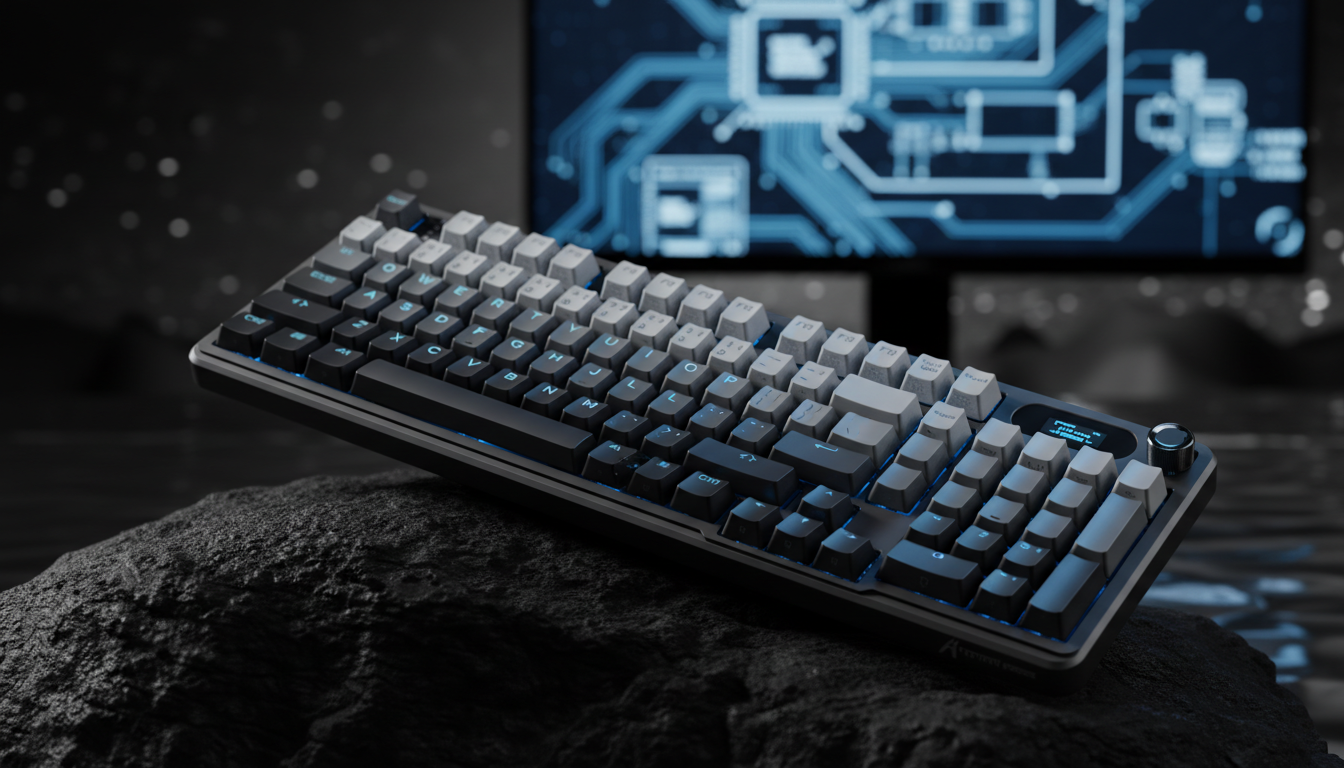
Electronic Latency: The Invisible Path from Physical Contact to USB Transmission
In competitive gaming, the difference between a successful parry and a missed window is often measured in single-digit milliseconds. While marketing materials frequently highlight "polling rates" as the definitive metric of speed, the reality is that the signal journey begins long before a packet reaches the USB port. This technical deep dive traces the path of a keystroke from the initial leaf contact to the final transmission, identifying the hidden bottlenecks in debounce logic and signal conditioning.

The Physical Layer: Leaf Contact and Signal Stability
The journey begins at the switch. In a traditional mechanical switch, a plastic stem pushes a metal leaf contact against a stationary terminal. While this seems instantaneous, the electrical reality is far more complex. When two metal surfaces meet, they do not create a perfect electrical connection immediately. Instead, they "bounce" or vibrate, creating a series of rapid on-off signals before settling into a stable "closed" state.
Our research into extreme signal conditioning—often seen in fields like plant electrophysiology—reveals that all physical interfaces require stabilization periods. For instance, according to research insights on plant tissue electrodes, impedance stabilization can take anywhere from 10 to 100 milliseconds due to electrochemical interfaces. While mechanical keyboard switches are far faster, the principle remains: the raw signal is "dirty" and requires firmware intervention to be usable.
The Hall Effect Alternative
Magnetic switches, or Hall Effect (HE) switches, bypass the physical "leaf" contact entirely. Instead of metal hitting metal, a sensor measures the change in a magnetic field as a magnet moves closer. This eliminates physical bounce, allowing for "Rapid Trigger" technology where the reset point is dynamic rather than fixed.
Modeling Note (Hall Effect Advantage): We modeled the reset-time delta for a competitive player using a deterministic kinematic model (t = d/v).
Parameter Mechanical (Worn) Hall Effect (RT) Unit Reset Distance 0.8 0.1 mm Lift Velocity 120 120 mm/s Debounce Time 15 0.2 ms Total Latency ~26.7 ~6.0 ms Boundary Conditions: Assumes constant lift velocity and budget mechanical firmware. Real-world results vary by switch wear and finger speed.
Debounce Logic: The Hidden Latency Killer
Debounce logic is the firmware's method of "waiting out" the physical vibration of the metal leaf. Many budget keyboards utilize a "defer" debounce algorithm, which waits for a fixed period (often 10–20ms) after the first signal is detected to ensure the switch has stopped bouncing. This adds a massive, perceivable delay to every input.
Enthusiast-grade firmware allows for "eager" debounce, where the first signal is transmitted immediately, but the keyboard then "ignores" any further signals for a few milliseconds to prevent accidental double-clicks (chatter). However, if the debounce time is set too low (e.g., <1ms), worn switches will inevitably double-click.
Based on patterns observed from technical support and RMA data, one of the most common causes of perceived "input lag" isn't the polling rate, but rather overly conservative factory debounce settings designed to mask low-quality switch manufacturing.
MCU Processing and the Scan Matrix
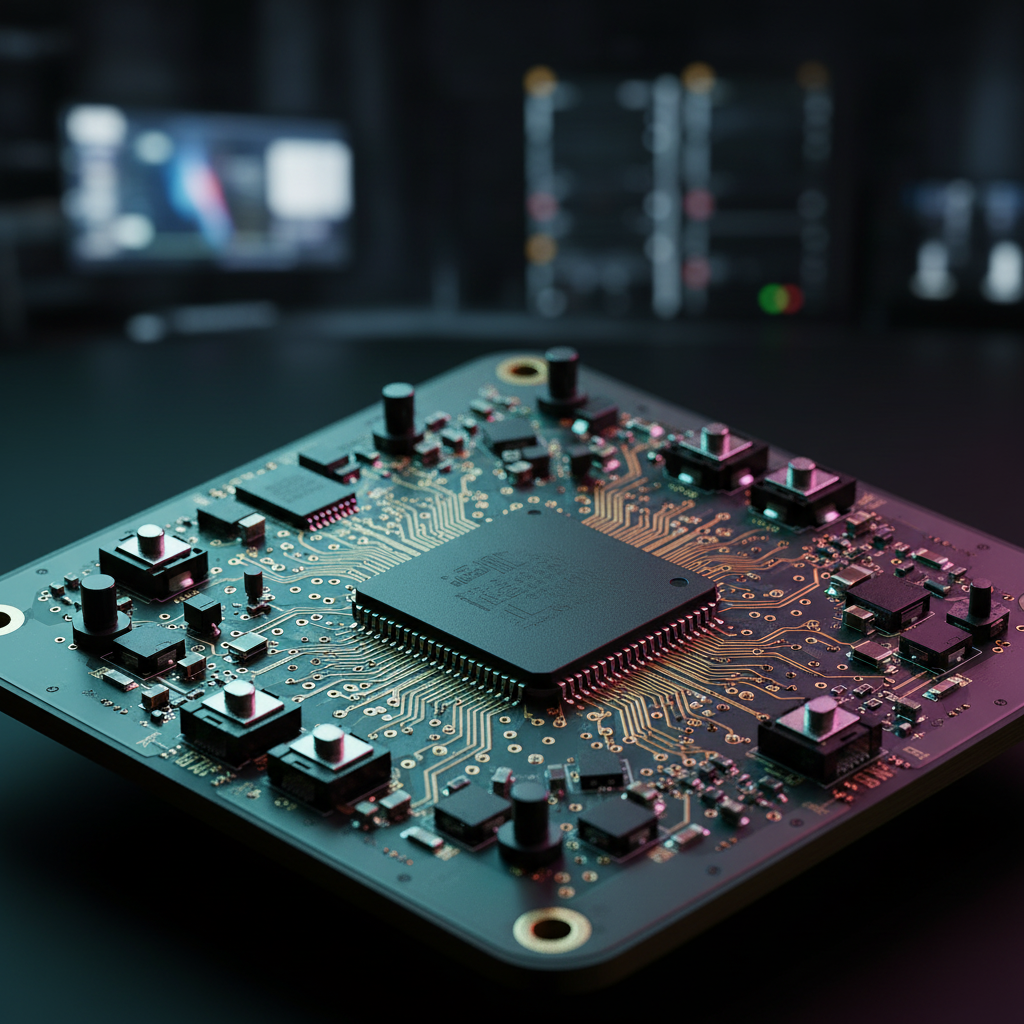
Once the signal is stabilized, the keyboard's Microcontroller Unit (MCU) must identify which key was pressed. Most keyboards do not have a dedicated wire for every key; instead, they use a "scan matrix" of rows and columns.
- Scanning: The MCU rapidly cycles through rows, checking which columns complete a circuit.
- Interrupt Handling: High-performance MCUs, such as those in the Nordic Semiconductor nRF52 series, use hardware interrupts to prioritize keypress data over background tasks like RGB lighting effects.
- Buffer Management: If the MCU processing is slow, "bufferbloat" can occur, where inputs are queued, leading to inconsistent delivery times (jitter).
According to the Global Gaming Peripherals Industry Whitepaper (2026), optimizing the scan routine and interrupt priority often yields more real-world improvement than merely chasing the highest polling rate.
The USB Transmission Layer: 1000Hz to 8000Hz
After the MCU identifies the keypress, it packages the data into a "report" based on the USB HID (Human Interface Device) Class Definition. The frequency at which the PC "asks" the keyboard for these reports is the polling rate.
Breaking Down 8000Hz (8K)
At 8000Hz, the polling interval is 0.125ms (1 / 8000). This is a significant reduction from the 1.0ms interval of standard 1000Hz keyboards. However, 8K polling introduces specific system constraints:
- CPU Overhead: The PC must process 8,000 Interrupt Requests (IRQs) every second. This can stress the OS scheduler and single-core CPU performance.
- USB Topology: To maintain 8K stability, the device must be plugged into a direct motherboard port (Rear I/O). Using a USB hub or front-panel header often results in packet loss due to shared bandwidth and poor shielding.
- Motion Sync Math: Motion Sync aligns the sensor/key data with the USB Start of Frame (SOF). While this adds a deterministic delay of half the polling interval, at 8000Hz, this is only ~0.0625ms—a negligible trade-off for the improved temporal consistency it provides.
IPS and DPI Saturation
For mice, saturating the 8000Hz bandwidth requires enough data points to be generated. The formula is: Packets = Movement Speed (IPS) * DPI. To fully utilize an 8000Hz rate at 800 DPI, a user must move the mouse at least 10 IPS. At a higher 1600 DPI, only 5 IPS is required. This is why many high-performance players prefer slightly higher DPI settings on 8K devices to ensure the cursor path remains smooth during micro-adjustments.
Wireless Latency: 2.4GHz vs. Bluetooth
Wireless transmission adds another layer of complexity. Modern 2.4GHz proprietary connections aim for "wired-like" performance, but they are still subject to environmental interference.
- 2.4GHz (Dongle): Uses a dedicated receiver to minimize packet retransmission. High-performance wireless MCUs can now support 4000Hz or even 8000Hz polling, though this severely impacts battery life.
- Bluetooth: Operates with a much larger and more variable buffer, typically adding 10–30ms of unpredictable lag. Bluetooth is suitable for productivity but is objectively unsuitable for reaction-based competitive gaming.
Modeling Note (Wireless Runtime at 4000Hz): We modeled the battery endurance of a high-performance wireless setup using a linear discharge model.
Variable Value Unit Rationale Battery Capacity 500 mAh Typical high-spec battery Sensor Current 2.5 mA HE sensor draw Radio Current (4K) 6.0 mA Nordic SoC at 4000Hz System Overhead 1.5 mA MCU & Peripherals Estimated Runtime ~40 Hours At 80% efficiency Boundary Conditions: Assumes constant active usage. Intermittent idle periods will extend this runtime significantly.
Compliance and Safety Standards
When dealing with high-performance electronics and high-capacity lithium batteries, regulatory compliance is the ultimate baseline for trustworthiness. Authoritative bodies like the FCC (Equipment Authorization) ensure that the 2.4GHz radio emissions do not interfere with other household devices. Furthermore, the ISED Canada Radio Equipment List provides a secondary layer of North American verification.
For users, ensuring your device carries the appropriate markings (CE, FCC, UKCA) is not just about legality; it is a verification that the internal power management and RF shielding meet rigorous safety standards, preventing issues like battery swelling or signal dropouts during critical moments.
Summary of the Signal Journey
To visualize the total impact of these stages, consider the following comparison between a standard office setup and an optimized competitive setup.
| Stage | Standard Setup | Optimized (Hall Effect + 8K) | Impact |
|---|---|---|---|
| Physical Actuation | 5.0ms | 2.0ms | Switch speed |
| Debounce Logic | 15.0ms | 0.2ms | Firmware efficiency |
| MCU Scan/Process | 2.0ms | 0.5ms | Processing power |
| USB Transmission | 1.0ms (1K) | 0.125ms (8K) | Polling rate |
| Total Est. Latency | ~23.0ms | ~2.8ms | ~88% Reduction |
Practical Recommendations for Gamers
- Prioritize Switch Type over Polling Rate: If you are choosing between a 1000Hz Hall Effect keyboard and an 8000Hz Mechanical keyboard with standard switches, the Hall Effect board will almost always provide lower total latency due to the elimination of debounce delay.
- Tune Your Debounce: If your keyboard software allows it, lower the debounce time in 1ms increments until you notice double-clicking, then move it up by 1ms. This is the single most effective "free" speed upgrade.
- Direct Connection: For 4K/8K devices, always use the rear USB ports on your motherboard. Avoid front-panel headers, which are often connected via unshielded internal cables that can cause signal jitter.
- Monitor Synergy: High polling rates reduce micro-stutter, but to see the benefit, you typically need a high refresh rate monitor (240Hz+). Without the visual throughput, the smoother cursor path provided by 8K polling is perceptually wasted.
By understanding that latency is a cumulative "tax" paid at every stage of the signal chain, you can make informed decisions that prioritize real-world performance over marketing numbers.
This article is for informational purposes only. Modifying firmware or using non-standard settings may void manufacturer warranties. Always ensure your devices comply with local radio frequency regulations.

Dejar un comentario
Este sitio está protegido por hCaptcha y se aplican la Política de privacidad de hCaptcha y los Términos del servicio.