


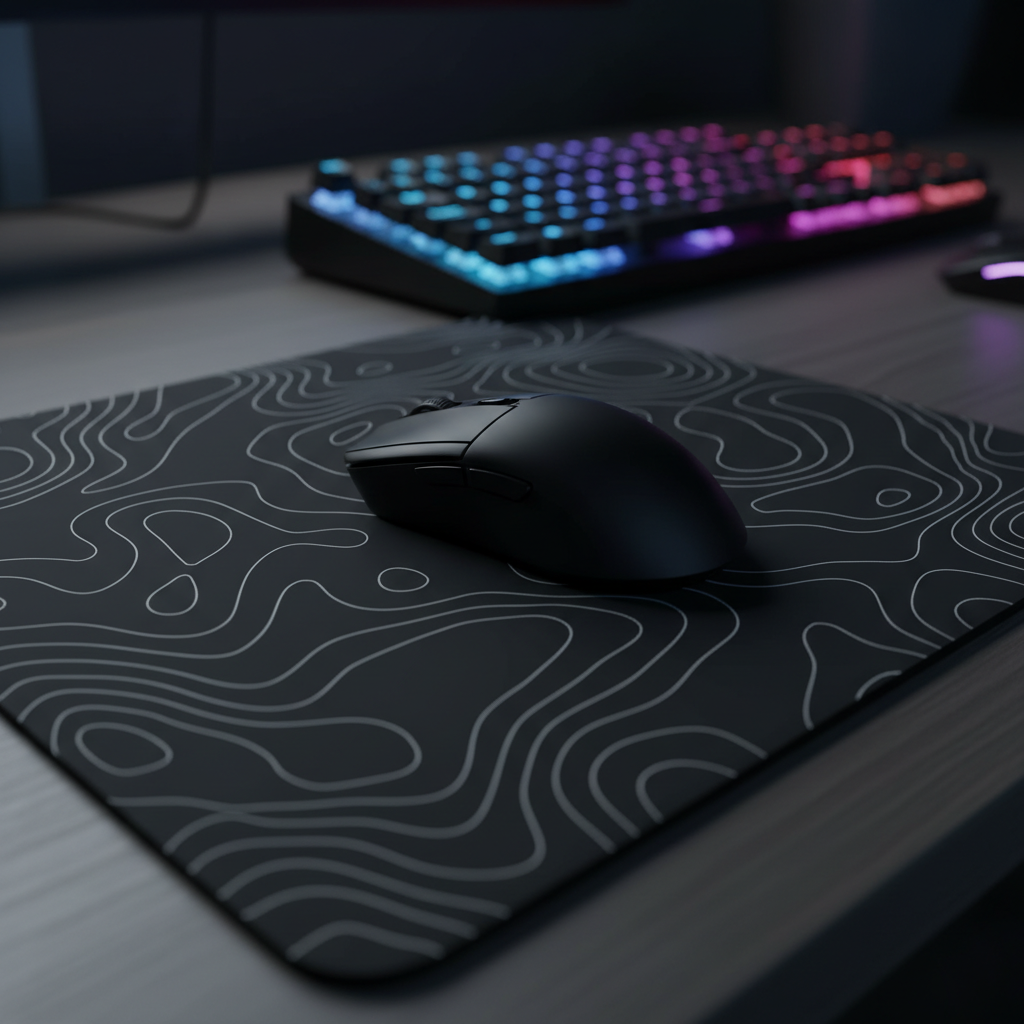
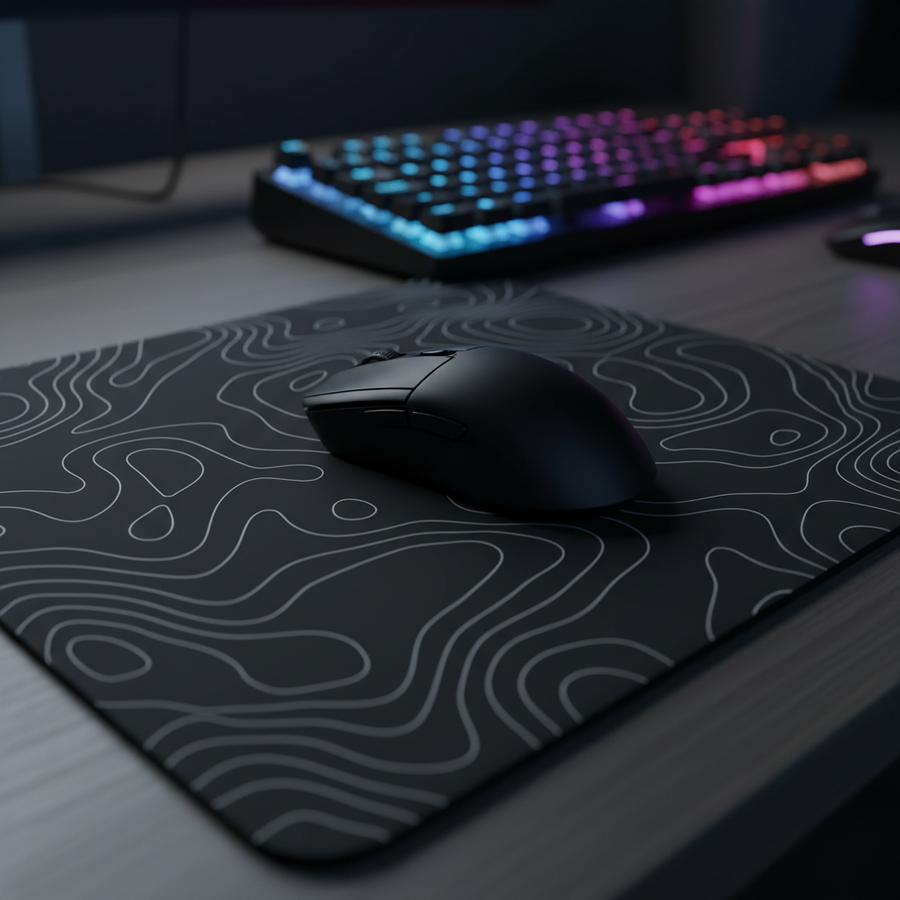
Recubierta vs. Sin Recubrimiento: Elegir una Superficie para Uso de Varios Años
En el entorno de alta presión del juego competitivo, la alfombrilla de ratón suele ser el componente más subestimado del conjunto de periféricos. Mientras que los sensores y los interruptores reciben un escrutinio técnico exhaustivo, la interfaz entre las patas del ratón y la superficie del escritorio dicta la consistencia de cada movimiento rápido y microajuste. Para los jugadores conscientes del rendimiento, la elección entre una alfombrilla "speed" con recubrimiento de fábrica y una alfombrilla "control" sin recubrimiento no es solo una cuestión de sensación inicial, sino una decisión sobre la trayectoria de la degradación del rendimiento tras miles de horas de uso.
Este artículo ofrece un análisis técnico de la longevidad de la superficie, la resistencia ambiental y el costo total de propiedad (TCO) para diversas tecnologías de alfombrillas de ratón. Basamos nuestras recomendaciones en modelos de escenarios y ciencia de materiales para ayudar a los usuarios a navegar las compensaciones entre la velocidad inmediata al sacarla de la caja y la predictibilidad táctil a largo plazo.

La Anatomía de la Degradación de la Superficie: Recubierta vs. Sin Recubrimiento
La diferencia fundamental entre estas dos categorías radica en cómo logran sus características de deslizamiento. Comprender los modos de fallo de cada una es crucial para predecir su utilidad a lo largo de varios años.
Superficies Recubiertas: La Trampa de la "Glosificación"
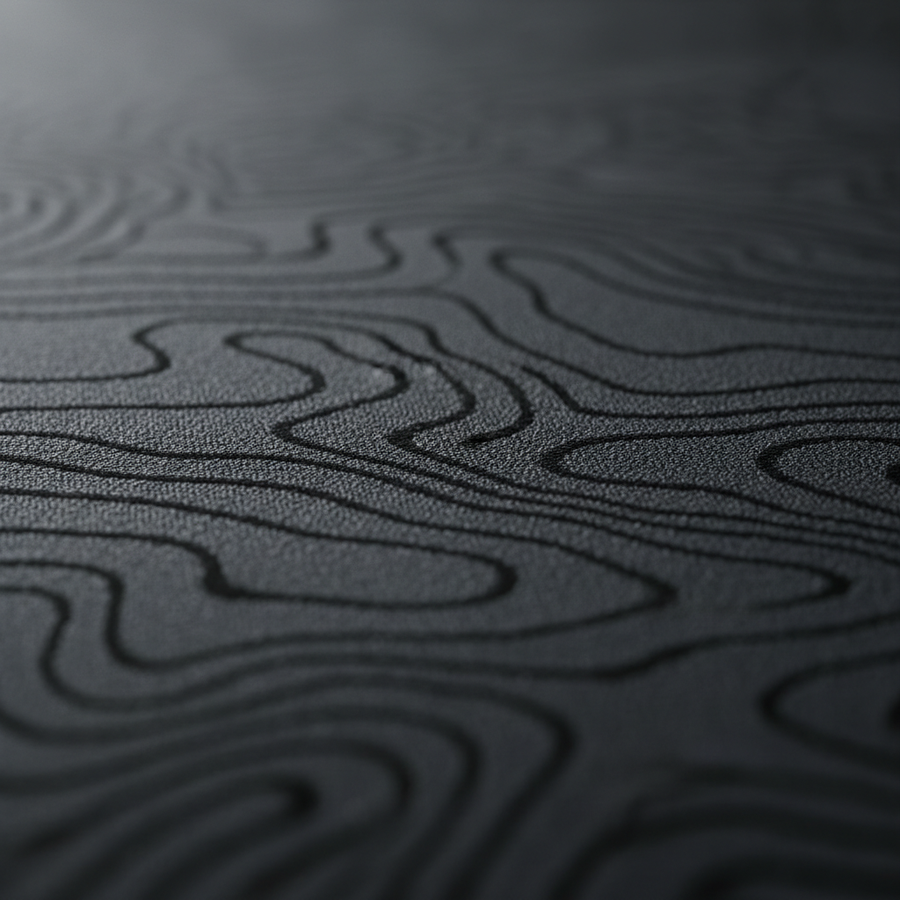
Las alfombrillas recubiertas, como la ATTACK SHARK CM03 eSport Gaming Mouse Pad (Rainbow Coated), utilizan una capa de película iridiscente o un recubrimiento resistente al agua y a las manchas "5S" aplicado sobre una base de fibra de ultra alta densidad. Estos recubrimientos proporcionan un deslizamiento sedoso y de baja fricción que a menudo se prefiere para juegos que requieren mucho seguimiento.
Sin embargo, en el uso práctico a largo plazo (normalmente superior a 12 meses), el modo principal de fallo no es que la tela se desgaste, sino que el recubrimiento desarrolle un pulido brillante y desigual. Esto ocurre con mayor frecuencia en áreas de mucho tráfico, típicamente una zona de 10x15 cm bajo el ratón. Esta "glosificación" crea una fricción estática inconsistente, haciendo que los microajustes se sientan "pegajosos" en las zonas desgastadas mientras que en otras permanecen demasiado resbaladizos. Los usuarios experimentados a menudo pueden identificar esta degradación observando el brillo de la alfombrilla bajo luz directa; una apariencia mate uniforme indica una superficie saludable, mientras que los parches reflectantes señalan erosión del recubrimiento.
Superficies sin recubrimiento: degradación lineal del rendimiento
Las alfombrillas sin recubrimiento dependen del tejido de la tela en sí (a menudo poliéster o nailon) para proporcionar resistencia. Aunque estas superficies pueden sentirse "más lentas" desde el primer día, exhiben una degradación del rendimiento más lineal. Con el tiempo, las fibras de la superficie pueden deshilacharse ligeramente, pero esto resulta en un aumento predecible y leve en el control que muchos jugadores competitivos prefieren después de un período de "rodaje" de 6 meses.
Según el Whitepaper de la Industria Global de Periféricos para Juegos (2026), la integridad estructural del tejido en las alfombrillas sin recubrimiento permite una vida útil efectiva mucho más larga, alcanzando a menudo más de 3 años con el mantenimiento adecuado, en comparación con el ciclo de vida de 12 a 18 meses de las opciones premium de tela recubierta.
Resistencia ambiental y longevidad de la tela
La consistencia del rendimiento está fuertemente influenciada por el entorno físico del usuario. La humedad, la temperatura y los contaminantes en el aire pueden transformar una superficie de alto rendimiento en una desventaja.
El impacto de la humedad
En climas húmedos, las alfombrillas de tela sin recubrimiento actúan como un disipador de calor para la humedad. Las fibras de la tela absorben la humedad, lo que aumenta la sensación "fangosa" y eleva significativamente la fricción estática. Esto hace que la alfombrilla se sienta inconsistente desde la mañana hasta la noche a medida que fluctúa la humedad ambiental.
Las superficies modernas recubiertas, como el ATTACK SHARK CM02 eSport Gaming Mousepad, contrarrestan esto mediante sus propiedades hidrofóbicas "5S". Al repeler la humedad y los aceites, estas alfombrillas mantienen un deslizamiento más consistente en diversos climas. Sin embargo, la desventaja sigue siendo: una vez que esa capa protectora se ve comprometida por el desgaste físico, la tela subyacente queda expuesta y vulnerable a los mismos problemas de humedad que las alfombrillas sin recubrimiento.
La alternativa de vidrio: la máxima resistencia ambiental
Para los jugadores que buscan una solución a largo plazo completamente inmune a la humedad y a los "puntos lentos", las superficies de vidrio templado como el ATTACK SHARK CM05 Tempered Glass Gaming Mouse Pad representan la cima de la durabilidad. Con una dureza Mohs de más de 9H y una textura nano-micrograbada, estas superficies no se "desgastan" en el sentido tradicional. La fricción permanece idéntica desde el día 1 hasta el día 1000, siempre que la superficie se mantenga limpia de polvo.
Modelado de escenario: el jugador de alta intensidad
Para entender mejor el estrés mecánico aplicado a estas superficies, modelamos un escenario específico de juego de alta intensidad. Este análisis ayuda a cuantificar los niveles "Peligrosos" de tensión que aceleran el desgaste de la superficie.
Nota de modelado: parámetros reproducibles
Nuestro análisis asume un jugador competitivo de FPS con el siguiente perfil:
| Parámetro | Valor | Razonamiento |
|---|---|---|
| Estilo de agarre | Claw | Alta presión hacia abajo sobre la superficie del mouse pad. |
| Uso diario | 6–8 horas | Representa el límite superior del juego profesional/semi-profesional. |
| Acciones por minuto (APM) | 300+ | Micro-movimientos de alta frecuencia y disparos rápidos. |
| Sensibilidad | 32cm/360 | Sensibilidad media-baja, que requiere movimientos de amplio rango. |
| Tasa de sondeo | 4000Hz / 8000Hz | Transmisión de datos de alta frecuencia que requiere precisión en la superficie. |
Resumen lógico: Usando el Índice de Tensión Moore-Garg (SI), calculamos una puntuación de 72, que cae en la clasificación de Peligroso para el estrés repetitivo. En este contexto, "estrés" se aplica tanto a los tendones del usuario como al recubrimiento de la superficie del mouse pad. Bajo estas condiciones, una alfombrilla estándar recubierta probablemente mostrará signos de brillo en 8–10 meses.
Sinergia ergonómica
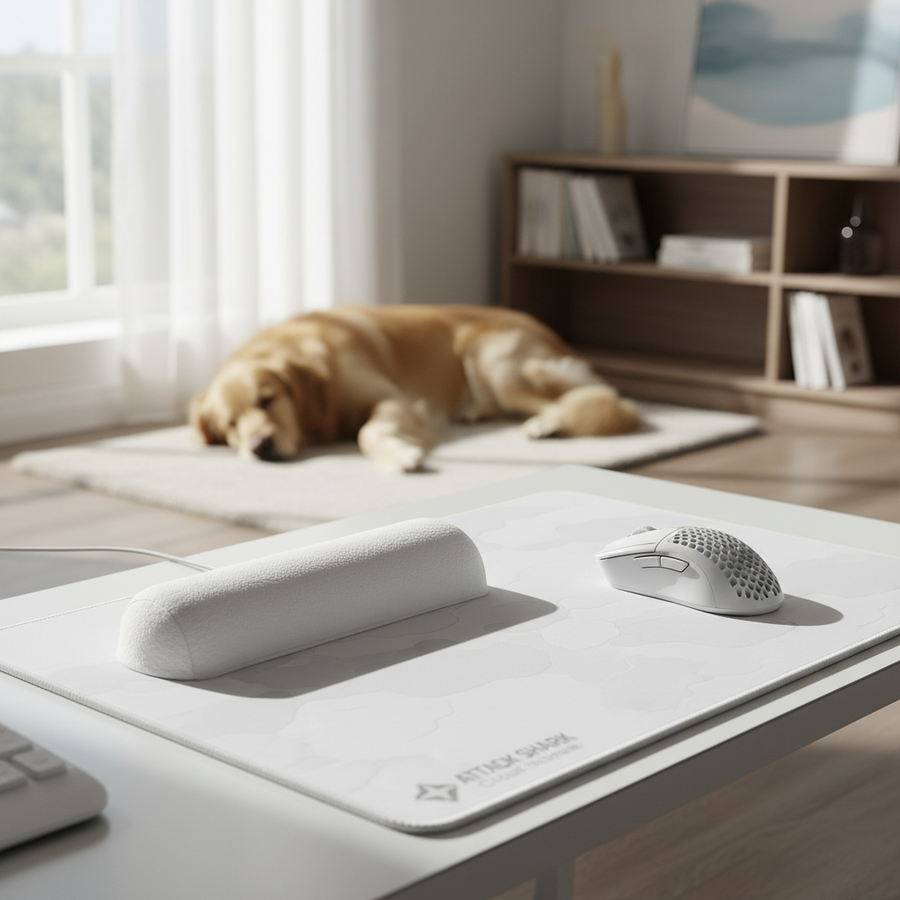
Para usuarios que priorizan la comodidad a largo plazo junto con el rendimiento de la superficie, soluciones integradas como el ATTACK SHARK Cloud Mouse Pad ofrecen una propuesta de valor diferente. Al usar espuma viscoelástica con agujeros de masaje, estas alfombrillas reducen la presión hacia abajo ejercida por la muñeca, lo que puede ralentizar indirectamente el desgaste de la superficie de seguimiento al distribuir el peso del usuario de manera más efectiva.
Rendimiento técnico: sondeo de 8000Hz y fidelidad de la superficie
A medida que la tecnología de juegos avanza hacia tasas de sondeo ultra altas, la "fidelidad" de la superficie del mouse pad se convierte en un cuello de botella técnico.
La barrera de sondeo 8K
Al operar a una tasa de sondeo de 8000Hz, el ratón envía un paquete de datos cada 0.125ms. Para asegurar que el sensor capture datos significativos a esta frecuencia, la textura de la superficie debe ser increíblemente consistente.
- Saturación del sensor: Para saturar el ancho de banda de 8000Hz, un usuario debe moverse a cierta velocidad relativa a su DPI. Por ejemplo, a 1600 DPI, se requiere una velocidad de movimiento de solo 5 IPS (pulgadas por segundo) para mantener el flujo de datos.
- Ruido en la superficie: En una alfombrilla con recubrimiento desgastado y zonas "pegajosas", el sensor puede experimentar micro-tartamudeos ya que la variación de fricción hace que el mouse se mueva en "pasos" en lugar de un arco suave. Esto es especialmente notable en monitores de alta tasa de refresco (240Hz+), donde la trayectoria visual del cursor se renderiza con extrema precisión.
Consideraciones sobre Motion Sync
Los sensores modernos a menudo usan "Motion Sync" para alinear los informes del sensor con el intervalo de sondeo del PC. A 1000Hz, esto añade un retraso determinista de ~0.5ms. Sin embargo, a 8000Hz, este retraso cae a un ~0.0625ms insignificante. Para aprovechar este tiempo de respuesta casi instantáneo, la superficie de la alfombrilla debe ofrecer baja fricción estática para evitar la "adhesión" inicial al comenzar un movimiento. Las alfombrillas de velocidad con recubrimiento están optimizadas para esto, pero su utilidad a varios años es menor que la de una alfombrilla de vidrio como la CM05, que ofrece la misma baja fricción sin el riesgo de fallo del recubrimiento.
Mantenimiento y régimen de limpieza
Un factor crítico y a menudo pasado por alto en el uso de varios años es cómo se limpia la alfombrilla. Nuestras observaciones a partir de patrones de soporte y pruebas de materiales sugieren que el método de limpieza incorrecto es la principal causa de la "muerte" prematura de la alfombrilla.
- El error del alcohol: La limpieza agresiva con soluciones a base de alcohol puede eliminar prematuramente los recubrimientos de fábrica. Para una alfombrilla con recubrimiento como la CM03, el alcohol puede disolver la película iridiscente, causando una degradación inmediata del rendimiento.
- La solución con jabón: Lavar a mano suavemente con jabón para platos suave y sin aditivos y agua tibia es la forma más segura de prolongar la vida de una alfombrilla con recubrimiento. Esto elimina aceites de la piel y sal sin abrasión química.
- Restauración sin recubrimiento: Las alfombrillas sin recubrimiento toleran mucho mejor el lavado por inmersión. Un remojo profundo puede restaurar a menudo una alfombrilla sin recubrimiento hasta el 90% de su rendimiento original al eliminar los residuos profundamente incrustados en el tejido, algo que rara vez es posible con una superficie recubierta degradada.
- Mantenimiento del vidrio: La alfombrilla para mouse de vidrio templado ATTACK SHARK CM05 simplemente requiere limpiarse con un paño de microfibra. Es la única superficie donde el rendimiento puede restaurarse al 100% de forma indefinida.
Análisis del costo total de propiedad (TCO)
Al tomar una decisión de compra, los jugadores conscientes del rendimiento deben considerar el costo por año de uso confiable en lugar del precio inicial.
| Tipo de alfombrilla | Costo inicial (estimado) | Vida útil efectiva | TCO (período de 3 años) |
|---|---|---|---|
| Recubrimiento económico | $25 | 9–12 meses | ~$75–$100 |
| Recubrimiento premium (CM03) | $40 | 14–18 meses | ~$80–$120 |
| Tela sin recubrimiento | $30 | 24–36 meses | ~$30–$45 |
| Vidrio templado (CM05) | $80 | Más de 5 años | ~$80 |
Aunque una alfombrilla recubierta premium ofrece una experiencia inicial excepcional, la ventaja a varios años claramente se inclina hacia la tela sin recubrimiento de alta calidad o el vidrio templado. Para el jugador competitivo que opera en niveles altos de tensión (SI=72), la alfombrilla de vidrio ofrece el mejor valor a largo plazo al eliminar por completo el ciclo de reemplazo.
Resumen de Recomendaciones
Elegir la superficie adecuada depende de tu tolerancia al mantenimiento y tu prioridad por la consistencia del deslizamiento.
- Para el Especialista en "Velocidad": Si exiges la menor fricción posible y no te importa un ciclo de reemplazo cada 12–15 meses, el ATTACK SHARK CM03 eSport Gaming Mouse Pad (Rainbow Coated) ofrece una superficie iridiscente de grado profesional que sobresale en juegos con mucho seguimiento.
- Para el Purista del "Control": Si prefieres un deslizamiento consistente, ligeramente más lento, que mejora con un período de adaptación, una alfombrilla de tela sin recubrimiento de alta densidad es la solución más rentable para más de 2 años de uso.
- Para el Inversionista a Largo Plazo: Si buscas una solución de "compra única" que sea inmune a la humedad, el sudor y el desgaste, el ATTACK SHARK CM05 Tempered Glass Gaming Mouse Pad es la elección definitiva. Su dureza 9H asegura que tu memoria muscular nunca se vea interrumpida por la degradación de la superficie.
- Para el Usuario Enfocado en la Ergonomía: Para quienes pasan largas horas tanto en juegos como en productividad, el ATTACK SHARK Cloud Mouse Pad equilibra la precisión de la superficie con el soporte de espuma viscoelástica para mitigar la fatiga de la muñeca.
Aviso Legal: Este artículo es solo para fines informativos. Las recomendaciones ergonómicas y los cálculos del índice de tensión se basan en modelado de escenarios y heurísticas generales de la industria; no constituyen asesoramiento médico. Los usuarios con condiciones preexistentes en la muñeca o la mano deben consultar a un profesional de la salud calificado antes de realizar cambios significativos en su configuración.
Referencias & Fuentes
- Documento Técnico de la Industria Global de Periféricos para Juegos (2026)
- ISO 9241-410: Ergonomía de la Interacción Humano-Sistema
- Índice de Tensión Moore-Garg: Un Método para Analizar Trabajos por Riesgo de Trastornos en la Extremidad Superior Distal
- Modelos de Consumo de Energía del Nordic Semiconductor nRF52840
- Definición de Clase USB HID (v1.11)
- Teorema de Muestreo de Nyquist-Shannon - IEEE Xplore