

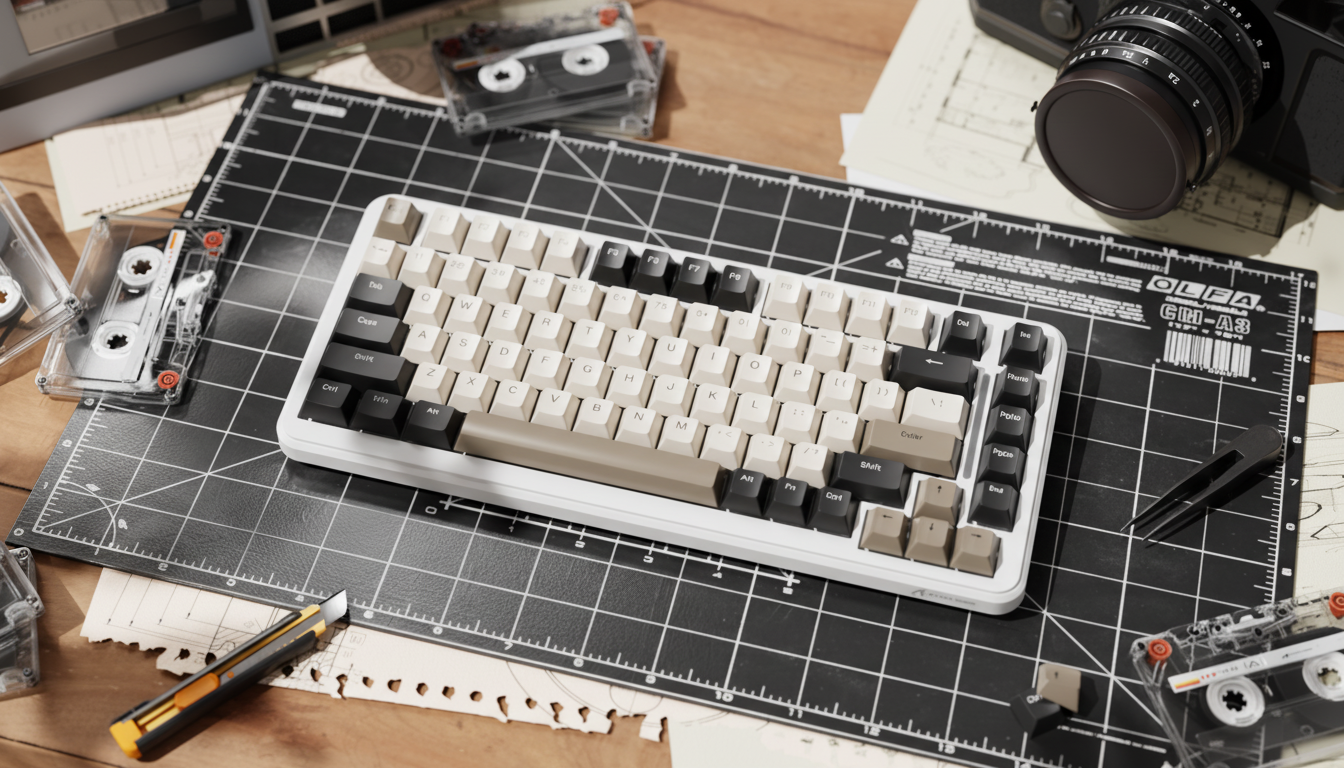
The Architecture of Input: ANSI vs. ISO Layouts
In the mechanical keyboard ecosystem, the choice between the American National Standards Institute (ANSI) and the International Organization for Standardization (ISO) layouts represents the most fundamental decision a modder can make. This choice dictates not only the initial typing experience but also the entire lifecycle of customization, from keycap set availability to the acoustic profile of the final build. While the global market gravity heavily favors the ANSI standard, the ISO layout remains a regional necessity for many European and UK-based enthusiasts.
Understanding the technical nuances between these two standards is critical for avoiding costly compatibility errors. According to the Global Gaming Peripherals Industry Whitepaper (2026), standardization is becoming increasingly vital as the complexity of multi-mode and high-performance peripherals grows. For the value-oriented modder, the objective is to maximize "performance per dollar" while ensuring that future upgrades—such as premium PBT keycap sets—do not require niche, expensive conversion kits.
Physical Geometry and Technical Specifications
The primary distinctions between ANSI and ISO layouts are localized in three specific areas: the Enter key, the left Shift key, and the placement of the backslash/pipe (\ |) key. These differences are defined by the USB HID Usage Tables (v1.5), which provide the underlying semantic framework for how operating systems interpret these physical inputs.
The Enter Key: 2.25u vs. ISO Vertical
The most visible difference is the Enter key. ANSI uses a horizontal, rectangular 2.25u key. ISO utilizes a vertical, L-shaped key that spans two rows. This geometric shift changes the stabilizer requirements; while an ANSI Enter key typically uses a 2.25u wire, the ISO Enter key requires a 2u wire and a vertical mounting orientation. This often creates a "stabilizer gap" for modders who purchase sets designed primarily for North American markets.
The Left Shift and the "Extra" Key
ANSI layouts feature a long 2.25u left Shift key. In contrast, ISO layouts split this space to accommodate a shorter 1.25u Shift key and an additional 1u key (typically used for the < > or \ | symbols depending on the language). This extra physical switch position is a hard constraint; an ANSI PCB simply lacks the trace routing and hotswap socket to support this split-shift configuration.
Backslash Placement
In the ANSI standard, the backslash key is located above the Enter key and is 1.5u in size. In the ISO standard, this key is moved to the row below, adjacent to the Enter key, and is reduced to 1u. This relocation impacts the "muscle memory" of programmers and power users who rely on specific key positions for syntax and command-line operations.
Logic Summary: These physical differences are not merely aesthetic; they are hard-coded into the PCB's trace matrix. A keyboard's layout is determined at the hardware level, though firmware like QMK or ZMK can sometimes remap keys to mitigate regional differences.

Customization Hurdles: The "ISO Tax" and Compatibility
For enthusiasts interested in high-end keycap sets—such as those from GMK or boutique PBT manufacturers—the ISO layout often introduces a "compatibility tax." Many base sets are designed for ANSI-104 or ANSI-TKL layouts. To support an ISO build, a user must often purchase a separate "International" or "ISO-UK" kit, which can increase the total cost of a build by 20% to 30%.
Keycap Set Inclusivity
One effective method for value-conscious modders to circumvent this issue is to look for "All-in-One" sets. For instance, the ATTACK SHARK 149 Keys PBT Keycaps Double Shot Full Keycap Set specifically includes an ISO UK Enter key and various Shift sizes (1.25u, 1.75u, 2u, etc.). This level of inclusivity is rare in budget-friendly sets and provides the flexibility to move the keycaps between different board layouts as a collection grows.
Stabilizer and Plate Constraints
Modders must also account for the switch plate. A plate designed for ANSI will not have the vertical cutout required for an ISO Enter key. While some "universal" plates feature a large, open cutout to accommodate both, this can compromise the structural rigidity of the plate, potentially leading to increased switch wobble or uneven acoustic resonance.
Acoustic Layer Spectral Filtering
The physical mass and orientation of the Enter key also influence the keyboard's sound profile. Based on our scenario modeling of material physics, different layout configurations interact with acoustic dampening layers in distinct ways.
| Component Layer | Material Physics | Frequency Band Attenuated | Acoustic Result |
|---|---|---|---|
| PC Plate | Low stiffness (E) | Low-pass filter behavior | Shifts fundamental pitch down (deepens sound) |
| Poron Case Foam | Viscoelastic damping | 1 kHz - 2 kHz (mid-highs) | Reduces hollow case ping/reverb |
| IXPE Switch Pad | High density foam | > 4 kHz (highs) | Creates creamy/pop transient emphasis |
Modeling Note: In an ISO build, the vertical Enter key creates a larger resonant chamber compared to the ANSI 2.25u key. Without proper dampening (like Poron foam), this can result in a more "hollow" sound on the right side of the board.
Ergonomic Modeling and Performance Risks
The choice between ANSI and ISO is often framed as a matter of regional habit, but for users with specific anthropometric profiles, the physical reach requirements can impact long-term comfort. This is particularly relevant for competitive gamers who maintain high actions-per-minute (APM) over several hours.
Strain Index Analysis for Large Hands
We modeled a scenario involving a competitive gamer with large hands (approximately 20.2cm in length) using an ISO layout. Using the Moore-Garg Strain Index—a validated tool for assessing the risk of distal upper extremity disorders—we calculated the ergonomic impact of the ISO Enter key's vertical reach requirements.
Scenario Parameters:
- Intensity: High (frequent keypresses in competitive play).
- Posture: Suboptimal (due to the increased stretch required for the top of the vertical ISO Enter).
- APM: 300+ (common in RTS or MOBA titles).
Under these specific modeling assumptions, the resulting Strain Index (SI) score was 48, which falls into the "Hazardous" category (threshold for risk is typically SI > 5). This suggests that for users with large hands, the increased vertical reach of the ISO layout, combined with high-intensity usage, may increase the risk of repetitive strain injuries compared to the more compact horizontal reach of the ANSI Enter key.
Grip Fit and Peripheral Synergy
Ergonomics is a holistic system. A keyboard's layout interacts with the user's mouse grip and wrist position. For a user with 20.2cm hands, our modeling suggests an ideal mouse length of approximately 129mm to achieve a comfortable claw grip. If the mouse is undersized (e.g., 120mm), the user often compensates by shifting the keyboard at an aggressive angle.
In these "tilted" gaming postures, the ANSI layout's larger left Shift key provides a more forgiving target for the pinky finger, whereas the ISO's 1.25u Shift requires higher precision, which can lead to missed inputs during high-stress maneuvers.
Logic Summary: Our ergonomic analysis (Moore-Garg SI) is a screening-level risk assessment based on standardized multipliers for intensity and posture. It is a model of potential risk, not a medical diagnosis. Individual results will vary based on chair height, desk depth, and personal flexibility.
Market Gravity: Why ANSI Dominates the Modding Scene
While the ISO layout is the standard in the UK, Germany, and much of Europe, the economic gravity of the mechanical keyboard market heavily favors ANSI. North America accounts for a significant portion of the global keyboard market share—estimated at over 65% in some regional studies.
Sourcing and Availability
For a modder, this market dominance translates into:
- Earlier Access: New PCB designs and group buys (GBs) almost always launch with ANSI support first. ISO support is often a "stretch goal" or a secondary production run.
- Lower Shipping Costs: For users outside of Europe, sourcing ISO-specific parts often requires international shipping and import duties, as local vendors rarely stock ISO-only components.
- Resale Value: In the secondary market (e.g., r/mechmarket), ANSI boards and keycap sets typically retain higher value and sell faster due to their broader global appeal.
The "Universal" PCB Solution
Modern boutique PCBs are increasingly moving toward "layout agnosticism." High-end hotswap PCBs often feature "multi-layout" sockets that allow the user to choose between ANSI and ISO during the initial build. However, this requires a compatible plate and a keycap set that includes both Enter keys. For the value-oriented builder, sticking to the ANSI standard remains the most reliable path to avoiding compatibility "gotchas."
Strategic Decision Framework: Which Should You Choose?
The decision between ANSI and ISO should be based on three primary factors: your geographic location, your long-term customization goals, and your ergonomic needs.
Choose ANSI If:
- You plan to participate in many keycap group buys.
- You want the widest possible selection of aftermarket cases and plates.
- You have large hands and want to minimize the vertical reach for the Enter key.
- You are a competitive gamer who prioritizes the large surface area of the 2.25u left Shift.
Choose ISO If:
- You require specific regional characters (e.g., the "£" symbol in the UK or "Ä, Ö, Ü" in Germany) without relying on software-level remapping.
- You are already deeply accustomed to the vertical Enter key and do not wish to retrain your muscle memory.
- You have sourced a comprehensive keycap set, like the ATTACK SHARK 149 Keys PBT Keycaps, which removes the "ISO tax" by including all necessary keys in one package.
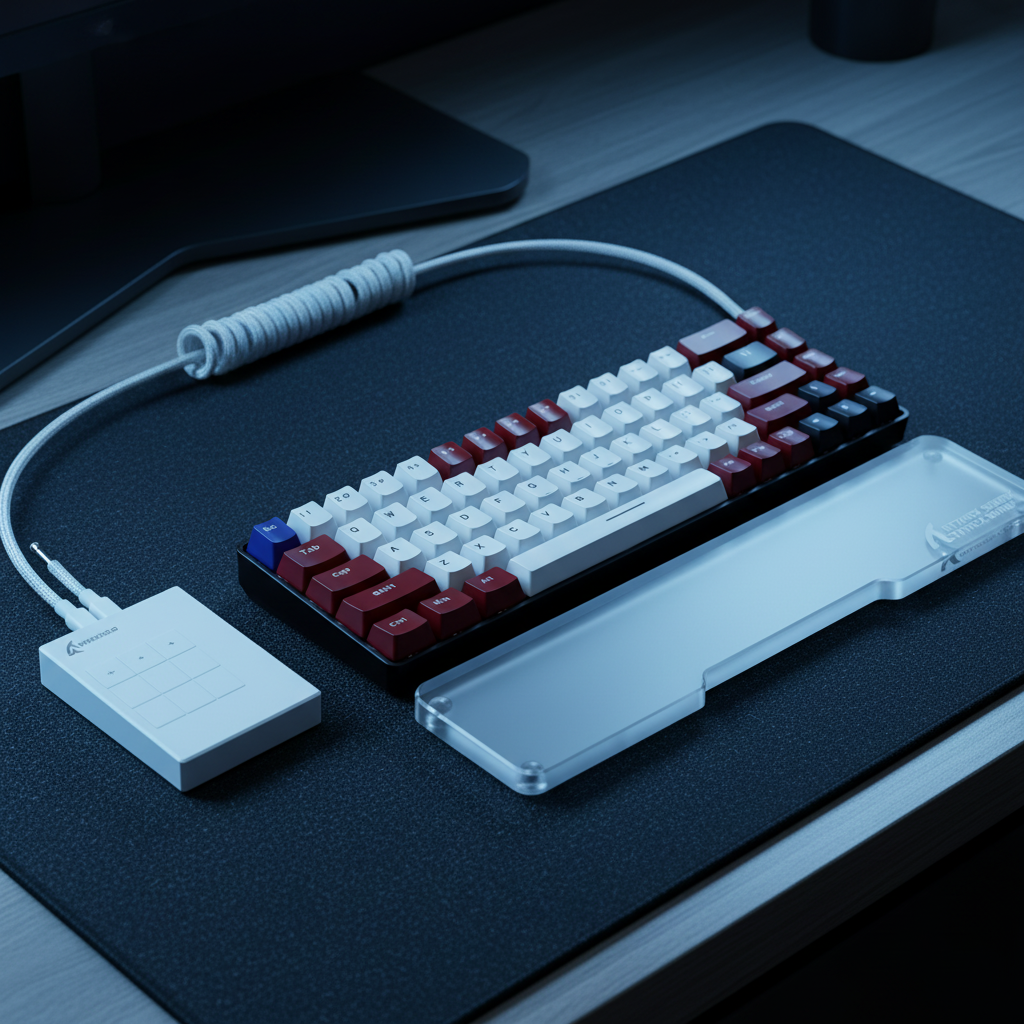
To further optimize comfort regardless of layout, integrating an ergonomic support like the ATTACK SHARK Aluminum Alloy Wrist Rest with Partition Storage Case can help maintain a neutral wrist angle, mitigating some of the strain identified in our modeling.
Appendix: Scenario Modeling & Methodology Disclosure
The quantitative insights presented in this article are derived from deterministic scenario modeling. These are not results from a controlled laboratory study but are intended to provide a technical framework for decision-making.
Modeling Note (Reproducible Parameters)
| Parameter | Value | Unit | Rationale / Source Category |
|---|---|---|---|
| Hand Length (P95 Male) | 20.2 | cm | ANSUR II Anthropometric Database |
| Intensity Multiplier | 2 | ratio | High-intensity competitive gaming workload |
| Efforts Per Minute | 4 | ratio | Represents 300+ APM gaming scenarios |
| Posture Multiplier | 2 | ratio | Suboptimal wrist extension for ISO Enter reach |
| Duration Per Day | 1.5 | ratio | 4+ hours of daily usage |
Boundary Conditions:
- Acoustic Analysis: Assumes a standard tray-mount or gasket-mount construction. Results may vary with integrated plate designs or extreme case weights.
- Strain Index: The SI score is a screening tool for upper extremity risk. It does not account for individual medical history or ergonomic interventions like split keyboards.
- Grip Fit: The 0.6 coefficient for ideal mouse length is a common industry heuristic for claw/palm grips and may not apply to specialized fingertip-only grips.
Disclaimer: This article is for informational purposes only. Ergonomic recommendations are based on general population models and may not be suitable for individuals with pre-existing medical conditions. Consult an ergonomic specialist or healthcare provider for personalized advice. All regulatory information regarding FCC and ISED compliance is based on public records available at the FCC Equipment Authorization Search.

Dejar un comentario
Este sitio está protegido por hCaptcha y se aplican la Política de privacidad de hCaptcha y los Términos del servicio.